
When I was in grade school it was commonly understood that the only place that we could find water in our solar system was on the Earth. I also remember my first grade teacher bringing in a picture of the surface of Mars. I was fascinated by how dirty it looked, like the dirt in my backyard. It looked dry with rocks haphazardly thrown about in no particular order. The picture was a marvelous example of how the Universe places information randomly. Yet, it did not look like a place where anything could live. Many years later the question still persists: Is there life on Mars? We may not know the answer to that question, but we do know that there is water on Mars and many other moons and planetary bodies throughout the solar system. It is important to remember that for us carbon based lifeforms we need water to live, after all we are made up of water. Therefore we tend to look for places in the universe that contain water as an indication of life.
First we need to make a distinction about what kind of water is needed for our type of life to exist, and what kind of water we would need to live off of if we visited other worlds. Liquid water is commonly understood as the most important ingredient for life to exist in. A good example of this is the water that is found in your body, it is a liquid, if it was a solid (ice) we could not survive. On the other hand if we were to visit another planet and needed water to live it could be in ice form or in liquid (the feasibility of turning ice water into liquid water on another planet is a separate discussion altogether).
What Planetary Bodies have Water?
As discussed above, Mars is a planet with water. It was the Phoenix lander in 2008 that found water ice in Martian soil, the same soil that I saw in first grade. In addition to the discovery of ice water, water vapor was found in the Martian atmosphere in 2015. So let’s take a step back and think about the implications for life on Mars right now. We know that there is ice water in the soil, and there is ice at the poles of the planet. Is there liquid water on Mars? There just may be liquid water under the ice caps at the southern pole of Mars. This means that there could be (emphasis on the could be) life on Mars. What it does mean is that Mars would be a great goal for humans to visit because we know that there is water.
Water on the Moon? In 2020 NASA announced that the Strategic Observatory of Infrared Astronomy or SOFIA had in fact found water on the surface of the Moon. This water is believed to be not only in the shadows of the Moon but in the sunlight as well. To be clear we are not talking about lakes and oceans of water. What has been discovered is water ice is a small concentration in the Clavius crater. What does this mean? To use the water on the Moon it would have to be mined out of the top layer or Lunar regolith. If NASA is correct and the amount of water is about 12 oz. for every square meter, that would be a big mining operation for the amount of water that we would need to sustain life.

Another surprising discovery was that of water on Enceladus, one of Saturn’s moons. In 2005, the Cassini spacecraft found plumes of water vapor erupting from Enceladus’s south pole. These plumes are thought to come from a global ocean that lies beneath Enceladus’s icy surface.

Credits: NASA/JPL-Caltech

Ganymede, another of Jupiter’s moons, is also thought to have a global ocean. In 2014, the Galileo spacecraft found evidence of a salty ocean beneath Ganymede’s icy crust.
These are just a few of the many discoveries that have been made about water in our solar system in recent years. These discoveries have changed our understanding of our solar system and have raised the possibility that there may be other planets or moons in our solar system that could support life.
The Search for Life Beyond Earth
There is renewed interest in finding life on other planets and moons in our solar system as a result of the discovery of water on other planets and moons. The presence of liquid water on other worlds is a good indication that they may be habitable since liquid water is essential for life.
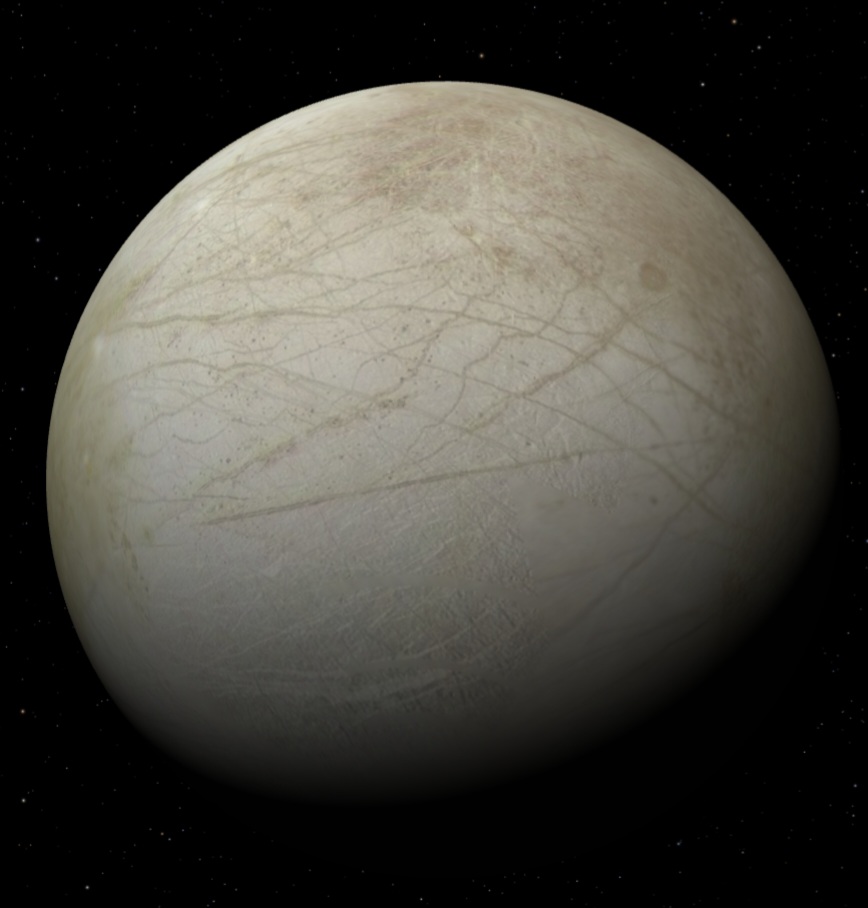
Europa, another of Jupiter’s moons, is a promising place to search for life beyond Earth. It is believed that the ocean on Europa is deeper than the ocean on Earth. There is also evidence that the ocean on Europa is salty and that its composition is similar to that of the ocean on Earth.
A mission is currently being planned to Europa and Enceladus to investigate their oceans and look for signs of life. It may be possible to find life beyond Earth through these missions.
The Future of Water Exploration
We’ve discovered water on other planets and moons in our solar system, which could change our understanding of the universe. Researchers are eager to learn more about these water worlds.
It is anticipated that water exploration will have a bright future. It is expected that we will learn more about water worlds in our solar system in the coming years, and that we will make new discoveries regarding the possibility of life beyond Earth in the future.
©️ Rocky Mountain Dispatch 2023
Leave a Reply