
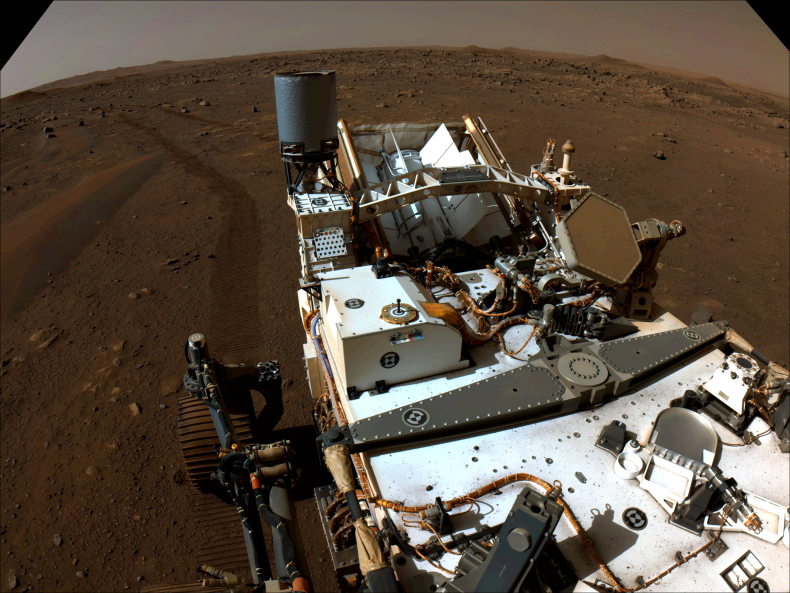

The Perseverance rover has found a diverse set of organic molecules on Mars, providing further evidence that the Red Planet may have once been habitable. The molecules were found in rocks that were once part of an ancient lakebed, suggesting that they may have been produced by living organisms.
The organic molecules were detected by the rover’s Sample Analysis at Mars (SAM) instrument, which uses a variety of techniques to identify and characterize organic compounds. The molecules were found in rocks that were collected from the Jezero Crater, which is believed to have been a lakebed billions of years ago.
The organic molecules found by Perseverance include a variety of compounds, including methane, ethane, and ethylene. These compounds are all thought to be precursors to life, and their presence on Mars suggests that the conditions on the planet may have been favorable for life to exist.
This has been an argument that my nine year old son and I have had, especially after seeing the John Carter movie; was there or is there life on the red planet? However, it is important to note, Leonard, that the presence of organic molecules does not necessarily mean that life existed on Mars. Organic molecules can also be produced by non-biological processes, such as the interaction of sunlight with water and carbon dioxide.
More research is needed to determine whether the organic molecules found by Perseverance were produced by life or by non-biological processes. However, the discovery is a significant step forward in the search for life on Mars, past or present.
What does this mean for the search for life on Mars?
The discovery of organic molecules on Mars is a major step forward in the search for life on the Red Planet. The presence of these molecules suggests that the conditions on Mars may have been favorable for life to exist billions of years ago.
If the organic molecules were produced by life, it would mean that Mars was once a much more habitable planet than it is today. It would also mean that there is a possibility that life still exists on Mars, perhaps in the form of microbes that live in underground habitats. But, for all you people that think like my son, it will not prove that we came from Mars.
What next for the Perseverance rover?
The Perseverance rover is continuing to explore the Jezero Crater in search of more evidence of life. The rover is also collecting samples of rocks and soil that will be returned to Earth for further analysis.
The samples collected by Perseverance could provide scientists with the first definitive evidence of life on Mars. They could also help scientists to understand how life might have evolved on Mars, and whether it could still exist on the planet today.
The Perseverance rover is a major step forward in the search for life on Mars. The discovery of organic molecules on Mars is a significant finding, and it is possible that the rover will find even more evidence of life in the future.
©️ Rocky Mountain Dispatch 2023
Leave a Reply