
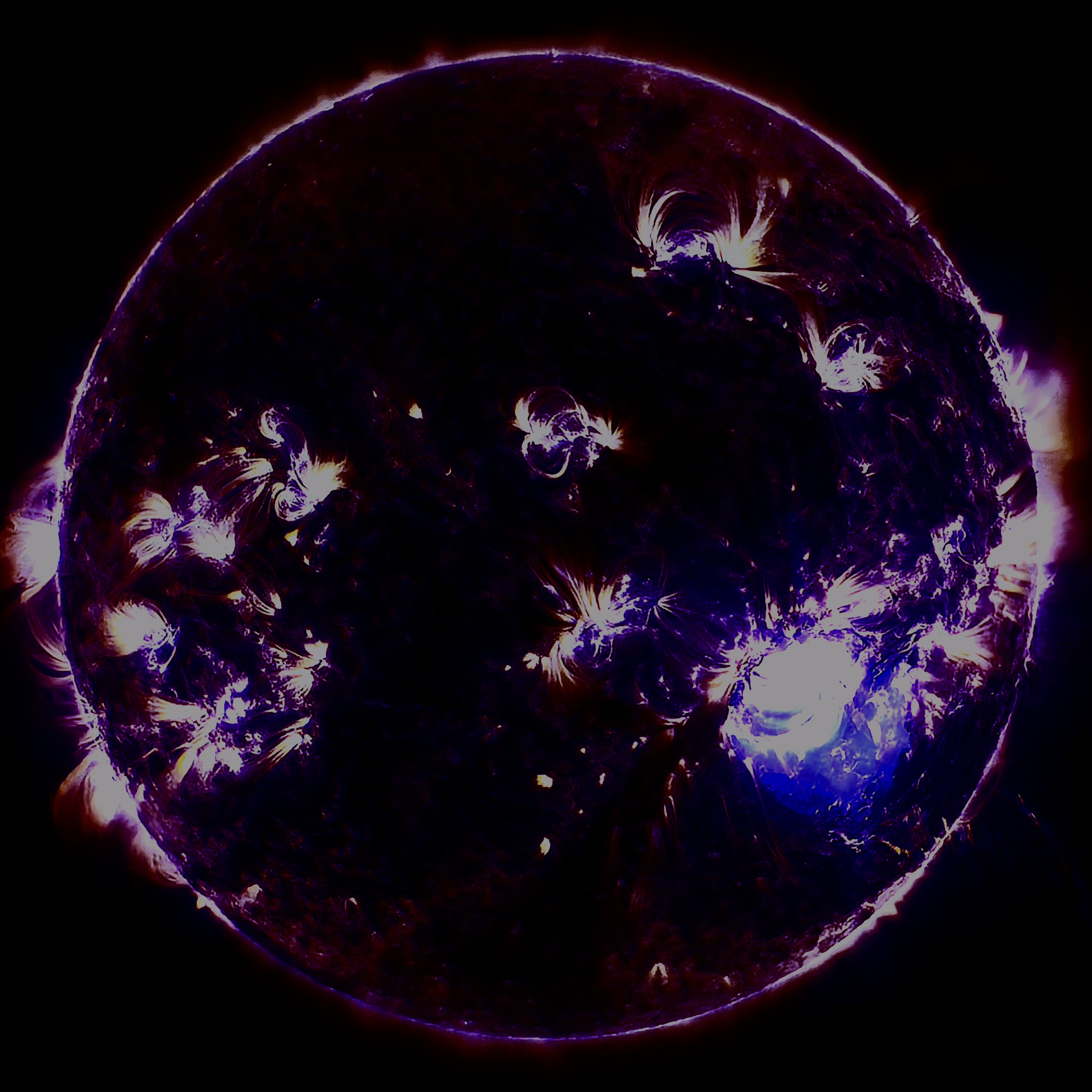

Dark matter is one of the greatest mysteries in physics. It makes up about 85% of the matter in the universe, but we can’t see it or interact with it directly. All we know is that it has gravity, and that it plays a crucial role in the formation and evolution of galaxies.
One way to study dark matter is to look for dark matter stars. These hypothetical stars are powered by the annihilation of dark matter particles, rather than by nuclear fusion.
If dark matter is made up of weakly interacting massive particles (WIMPs), then these particles could collide and annihilate each other in the center of a star. This would release energy in the form of gamma rays, neutrinos, and other particles.
This energy could power a dark matter star. Dark matter stars are thought to be very large and very diffuse, with masses millions or even billions of times that of the Sun.
Dark matter stars have never been directly observed, but there is some indirect evidence to suggest that they may exist. For example, astronomers have found evidence for dark matter halos around galaxies. These halos could be the birthplace of dark matter stars.
In 2023, the James Webb Space Telescope (JWST) may have spotted the first dark matter stars. JWST observed three distant objects that are very faint and have no obvious source of energy. If these objects are confirmed to be dark matter stars, it would be a major discovery in astronomy.
Dark matter stars could provide a new window into the mysterious substance. By studying these stars, we could learn more about the nature of dark matter and its role in the universe.
Implications for Dark Matter Research
If dark matter stars are real, they could revolutionize our understanding of dark matter. For example, dark matter stars could help us to determine the mass and composition of dark matter particles. They could also help us to understand how dark matter interacts with ordinary matter.
Dark matter stars could also help us to solve some of the biggest mysteries in cosmology, such as the nature of dark energy and the formation of supermassive black holes.
The Future of Dark Matter Star Research
The JWST is still in its early stages of operation, so it will take more time to confirm whether or not the three objects it observed are dark matter stars. However, the JWST is expected to play a major role in the search for dark matter stars in the coming years.
Other telescopes, such as the Large Synoptic Survey Telescope (LSST) and the Vera C. Rubin Observatory, will also play a role in the search for dark matter stars. These telescopes will survey the sky in unprecedented detail, which could help us to identify new dark matter star candidates.
The search for dark matter stars is one of the most exciting areas of research in astronomy today. If dark matter stars are real, they could provide us with a new window into the mysterious substance that makes up most of the matter in the universe.
©️ Rocky Mountain Dispatch 2023
Leave a Reply