
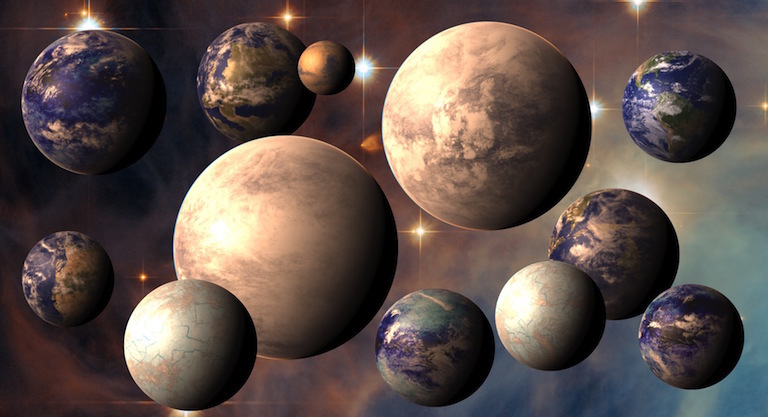

Astronomers are constantly pushing the boundaries of what is possible, using new technologies and innovative techniques to study distant objects in the universe in unprecedented detail. Their work is helping us to better understand the formation and evolution of planets, stars, and galaxies, and to search for new worlds that may be habitable.
Exoplanets: A New Frontier
One of the most exciting recent developments in astronomy is the discovery of exoplanets, or planets that orbit stars other than the Sun. Until a few decades ago, astronomers had no idea if exoplanets even existed. But now, thanks to new technologies, we know that there are trillions of exoplanets in our galaxy alone.
One of the most promising techniques for studying exoplanets is transit photometry. This technique involves measuring the tiny dip in brightness that occurs when an exoplanet passes in front of its star. By measuring the depth and duration of the transit, astronomers can learn about the size and orbit of the exoplanet.
Another promising technique is direct imaging. This technique involves taking images of exoplanets directly. Direct imaging is very challenging, because exoplanets are much fainter than their stars. But astronomers have made significant progress in recent years, and they have now directly imaged a handful of exoplanets.
The study of exoplanets is helping us to better understand the formation and evolution of planetary systems, including our own. It is also helping us to search for planets that may be habitable, which could potentially harbor life beyond Earth.
Distant Galaxies: A Window into the Past
Astronomers are also using new technologies to study distant galaxies. For example, the James Webb Space Telescope, which launched in 2021, is able to see galaxies that are so distant that their light has taken billions of years to reach us. The James Webb Space Telescope is also able to see through dust and gas, which allows astronomers to study the early universe in more detail.
The study of distant galaxies is helping us to learn more about the formation and evolution of the universe as a whole. It is also helping us to search for the first stars and galaxies that formed after the Big Bang.
Pushing the Limits of Technology
The study of distant objects is a challenging but rewarding field of astronomy. By pushing the limits of technology, astronomers are able to learn more and more about the vast and mysterious universe that surrounds us.
Here are some additional details about the cutting-edge technologies that astronomers are using to study distant objects:

Extremely Large Telescope (ELT): The ELT is currently under construction in Chile and is expected to be completed in 2027. It will be the largest optical telescope in the world, with a primary mirror that is 39 meters in diameter. The ELT will be able to see objects that are up to 10 times fainter than what can currently be seen with the largest telescopes.

Giant Magellan Telescope (GMT): The GMT is another massive optical telescope that is currently under construction. It will have seven primary mirrors, each of which will be 8.4 meters in diameter. The GMT is expected to be completed in 2024 and will be able to see objects that are up to 20 times fainter than what can currently be seen with the largest telescopes.

Nancy Grace Roman Space Telescope (Roman Space Telescope): The Roman Space Telescope is a NASA space telescope that is scheduled to launch in 2027. It will be equipped with a wide-field camera and a coronagraph, which will allow it to study exoplanets and distant galaxies in unprecedented detail.
These are just a few examples of the many new technologies that are being developed to study distant objects. As these technologies come online, astronomers will be able to make even more groundbreaking discoveries about the universe.
©️ Rocky Mountain Dispatch 2023

Leave a Reply