
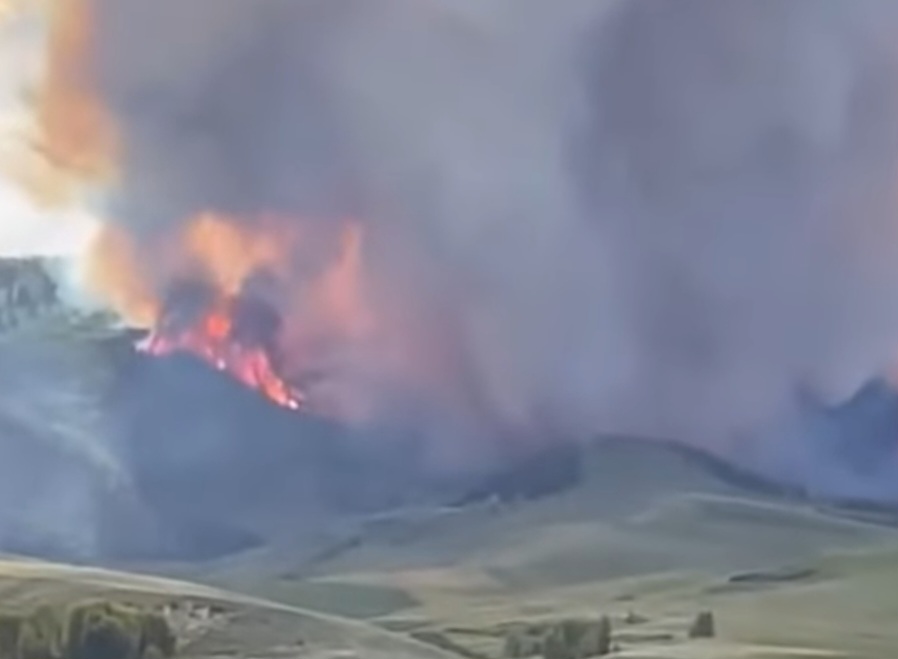

As the risk of wildfires continues to grow in the American West, land managers are looking for new ways to protect forests and communities. One promising approach involves using mushrooms to decompose slash piles, the piles of dead trees and branches that are left behind after thinning forests to reduce fire hazards.
Researchers at the University of Colorado Boulder are developing a method to inoculate slash piles with mycelium, the vegetative network of fungi. Mycelium is a powerful decomposer, and it can break down woody material at a much faster rate than traditional methods, such as burning or chipping.
In addition to reducing the risk of wildfires, the mycelium-based method also improves soil health. As the mycelium decomposes the slash piles, it releases nutrients into the soil, making it more fertile and water-retentive. This is particularly beneficial in the arid climate of the West.
The research team is currently testing their method in a pilot project at the Balcones Canyonlands Preserve in Texas. The results have been promising so far, and the team is hopeful that their method can be scaled up to help prevent wildfires and improve soil health across the West.
Benefits of the Mycelium-Based Method
The mycelium-based method offers several advantages over traditional methods of slash pile management:
- It is more effective at reducing the risk of wildfires. Mycelium can break down woody material at a much faster rate than burning or chipping, which means that slash piles are less likely to ignite.
- It is more environmentally friendly. Mycelium does not produce any harmful emissions, and it does not damage the soil.
- It is less expensive. Mycelium is a natural resource that is readily available, and it does not require the use of heavy machinery.
Potential Applications
The mycelium-based method could be used to manage slash piles in a variety of settings, including:
- Forests: To reduce the risk of wildfires and improve soil health.
- Urban areas: To manage tree trimmings and other woody waste.
- Agricultural areas: To improve soil health and reduce the need for synthetic fertilizers.
The mycelium-based method is a promising new approach to managing slash piles and reducing the risk of wildfires. It is also a sustainable and environmentally friendly way to improve soil health. As the research team continues to develop their method, it has the potential to be used in a variety of settings to benefit both the environment and the economy.
©️ Rocky Mountain Dispatch 2023
Leave a Reply