
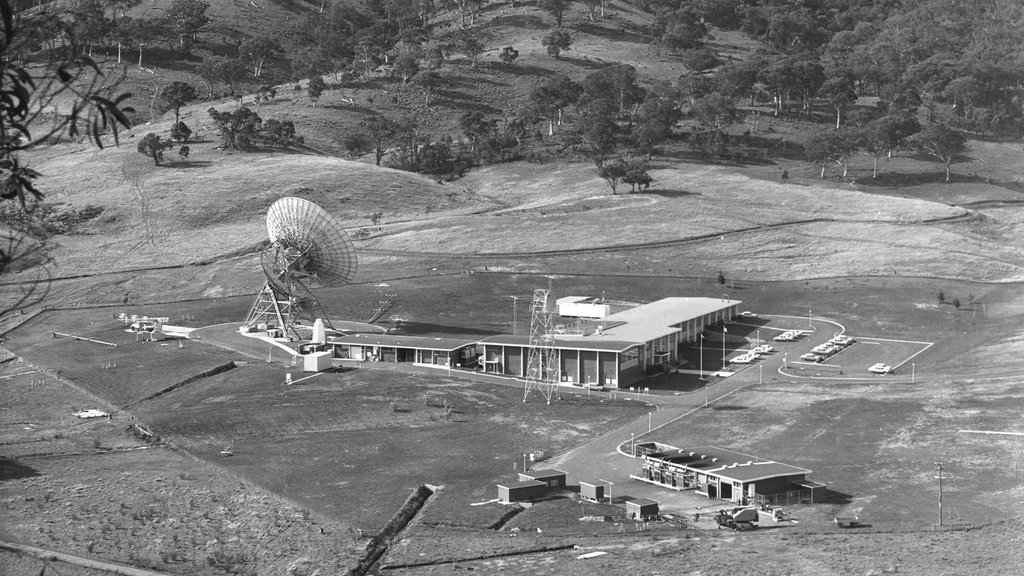

Canberra, Australia – Nestled amidst the rolling hills of the Australian countryside, a cluster of giant radio dishes pierces the sky. These are the ears and eyes of NASA’s Deep Space Network (DSN), a critical lifeline for humanity’s reach into the cosmos. For 60 years, the DSN has served as the silent orchestra conductor, coordinating the symphony of data flowing between Earth and spacecraft venturing beyond the Moon.
From the awe-inspiring images beamed back by the James Webb Space Telescope to the groundbreaking science transmitted from Mars by the Perseverance rover, the DSN has been the invisible thread weaving these cosmic tapestries. It’s a testament to human ingenuity and a vital piece of infrastructure underpinning our exploration of the universe.
But the DSN’s story is not merely one of the past. It’s a saga that continues to unfold, fueled by a relentless pursuit of innovation. As NASA sets its sights on returning humans to the Moon and venturing even further into the solar system, the DSN is undergoing a metamorphosis to meet the demands of this ambitious future.
A Network Woven Across Continents
The DSN is not a single entity, but rather a triumvirate of complexes strategically scattered across the globe. In Goldstone, California, Canberra, Australia, and Madrid, Spain, stand the 14 behemoth antennas that form the backbone of the network. This global distribution ensures that no matter where a spacecraft ventures, it’s never truly out of touch with Earth.

But the DSN is much more than just a collection of dishes. It’s a finely tuned orchestra, where schedulers meticulously choreograph the dance of data transmission. Each antenna plays its part, tracking spacecraft, sending commands, and capturing the scientific bounty they gather.
Embracing the Future: A Symphony of Light and Radio
To keep pace with the ever-growing chorus of spacecraft, the DSN is undergoing a technological revolution. Traditional radio waves are being joined by a new player: lasers. Imagine data zipping through space at the speed of light, a symphony of ones and zeros carried on a beam of pure energy.
This is the promise of laser communications, and the DSN is pioneering its use. Missions like Psyche, hurtling towards a metal-rich asteroid millions of miles away, are already using lasers to send stunning video back to Earth. The potential is limitless, with laser technology promising to unlock a new era of high-bandwidth communication from the depths of space.
But the DSN isn’t abandoning its radio roots. Instead, it’s embracing a hybrid future. Engineers are developing antennas that can seamlessly switch between radio and laser frequencies, ensuring seamless communication regardless of the distance or technology employed.
A Legacy of Innovation, a Future of Discovery
The DSN’s story is one of constant evolution, a testament to the human spirit’s insatiable thirst for knowledge and exploration. From its humble beginnings supporting the early Pioneer missions to its cutting-edge role in the Artemis program, the DSN has been a silent partner in some of humanity’s greatest scientific triumphs.
As we celebrate its 60th anniversary, we stand at the precipice of a new era in space exploration. With the DSN as our guide, we can look forward to even more awe-inspiring discoveries, groundbreaking science, and a deeper understanding of the universe that surrounds us. The next 60 years promise to be a symphony of even greater complexity and beauty, a testament to the enduring power of human ingenuity and our unwavering quest to reach for the stars.
©️ Rocky Mountain Dispatch 2023
Leave a Reply