
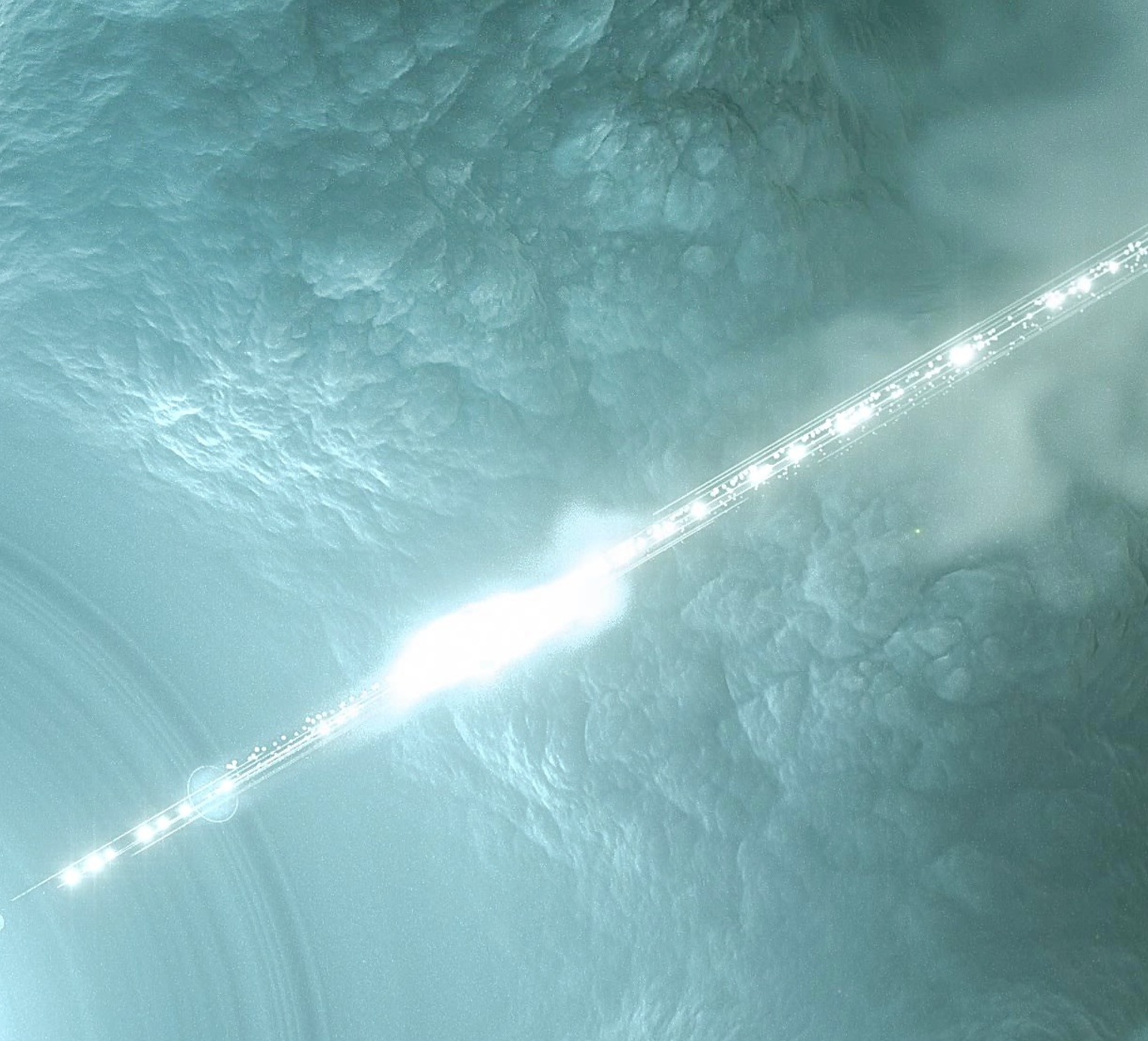
In the cavernous depths of a former gold mine, a scientific endeavor of extraordinary ambition is taking shape. The Deep Underground Neutrino Experiment (DUNE), led by Fermilab, is poised to change our understanding of the universe’s most enigmatic particles: neutrinos.
Nicknamed “ghost particles” for their almost non-existent interaction with matter, neutrinos stream through us constantly, most originating from the sun. Yet, they hold secrets about the fundamental forces that shape the universe.
DUNE’s construction involves blasting out massive caverns in the Sanford Underground Research Facility nearly a mile below the surface of South Dakota’s Black Hills. There, scientists will build enormous detectors filled with liquid argon.
Far below Earth’s surface, shielded from cosmic rays, these detectors have the best chance to capture the faint signals left by neutrinos. But the real magic of DUNE lies in its long-baseline design. A powerful beam of neutrinos will be fired from Fermilab in Illinois, traveling 800 miles straight through the Earth to the detectors in South Dakota.
This epic journey is key. Scientists believe neutrinos oscillate, changing between three known ‘flavors’ as they travel. By studying how these oscillations change over DUNE’s vast distance, physicists can probe the differences in mass between the neutrino types. This could unlock profound questions like why the universe is dominated by matter, and not antimatter.
However, DUNE’s potential extends even further. Its sensitive detectors might spot neutrinos bursting from supernovae, giving us an unprecedented early warning system for these cosmic explosions. Plus, the experiment could even detect signs of proton decay – a hypothetical event never observed, but which could point to a more unified theory of the universe’s forces.
“DUNE represents the cutting-edge of neutrino research, with an array of physics that will keep scientists busy for decades,” says [insert name of a neutrino physicist interviewed for the article]. “While the engineering challenges are immense, so is the potential payoff.”
Construction at the South Dakota site is expected to ramp up significantly in the coming years, with the experiment projected to start taking data sometime in the late 2020s. If DUNE is as successful as scientists hope, it might just rewrite the textbooks on particle physics – and our understanding of the universe itself.
©️ Rocky Mountain Dispatch 2024
Leave a Reply