
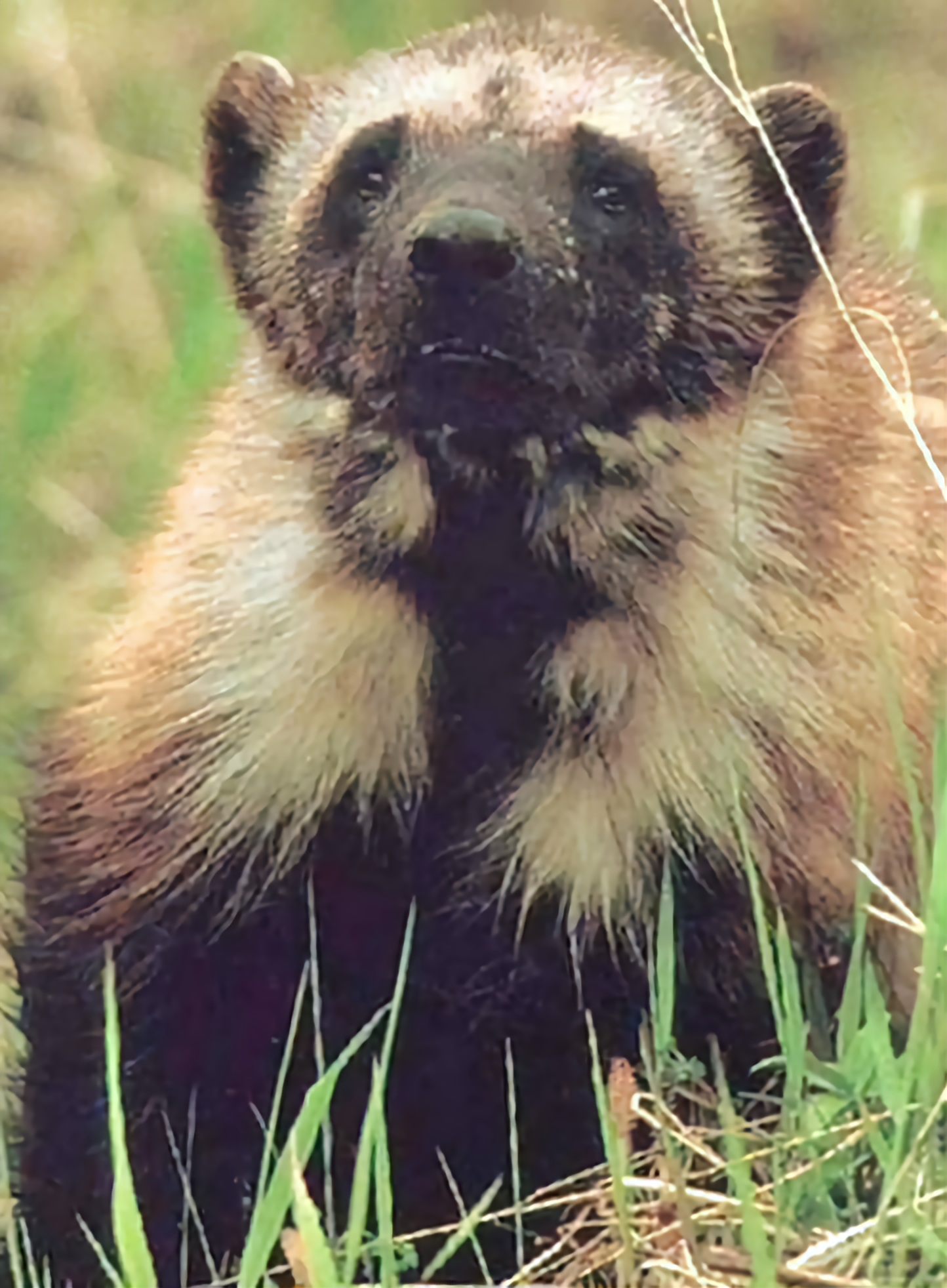
In the Rocky Mountains, conservationists debate bringing back one apex predator, the wolverine, extirpated from the area a century ago. The issue isn’t whether carnivores can survive in a landscape that has been deeply altered by humans. It’s whether or not the purpose of bringing the carnivore back is to model a historical ecosystem (that doesn’t exist) or to add a species to a new place.
This debate chimes in some ways with what happened when wolves were reintroduced in Yellowstone National Park. A study of their effect, over 20 years, found that while the reintroduction of wolves had benefits and improved the health of the park’s environment, they didn’t return it to the way it had been prior to the 20th century.
There were too many factors involved in the deep interrelationship between willows, beavers and elk (which was further complicated by the return of bison, among other creatures), and the legacy of human tinkering was too pervasive to change Park ecology back to the way it had once been.
Together, the Rocky Mountain wolverine controversy and the Yellowstone wolf study demonstrate the need to evolve an understanding of ecosystem function that can better appreciate the limits of human meddling, and provide guidance to future attempts at rewilding. They suggest that successfully re-establishing ecological health in a human-dominated world involves more than restoring missing components, more than adding new players to the game.
This approach implies that there is a wider, underlying balance to the game, a broad pattern or set of trade-offs within living ecosystems, human-dominated ones included. It forces us to consider that restoring ecosystems to the way they were requires a much deeper understanding than simply adding missing links. It involves a long-term process of adaptation to changing conditions and a recognition that the role of humans as the top predator might not be banished entirely.
For the Rockies, as for Yellowstone, the path to restoration is likely filled with choices to make along a fragile, uncertain continuum – and whether the wolverine can find its way back to this re-constructed landscape remains an open question. Perhaps a better answer resides not in restoration’s nostalgic longing, but rather in an acknowledgement that, notwithstanding inevitable alterations by humans, ecosystems have shown enormous capacity to adapt.
©️ The Rocky Mountain Dispatch LLC. 2024
Leave a Reply