
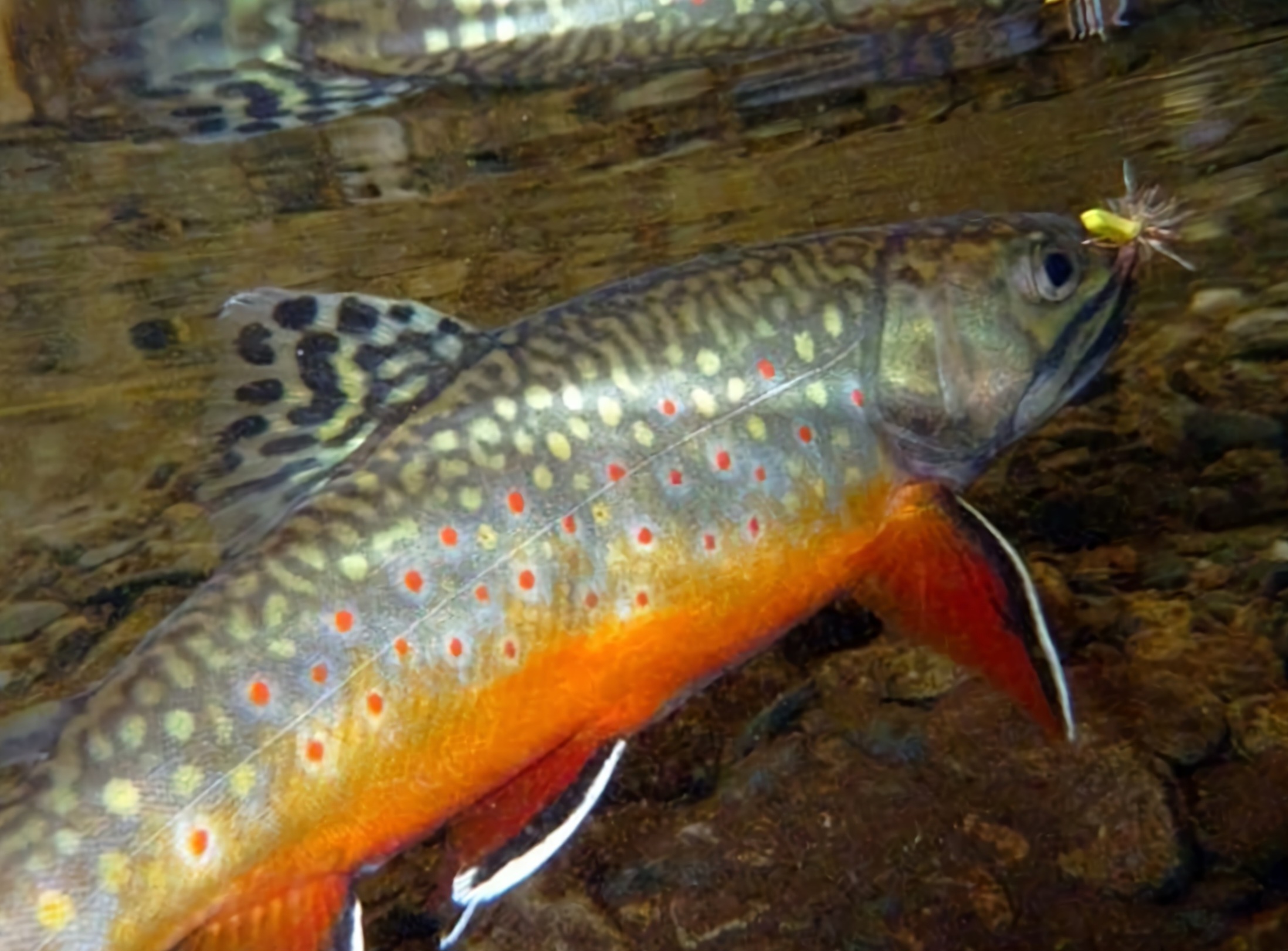

With air temperatures heading up in Wyoming, several of the state’s streams and rivers are running a little bit warmer than usual. The Wyoming Game and Fish Department is asking anglers to modify their fishing practices during the state’s peak of summer heat. Warmer water temperatures can result in greater fish mortality, particularly Wyoming’s trout.
‘This is the time of year when the water temperatures are the highest. The warm surface temperatures can be lethal for trout,’ Alan Osterland, chief of the Wyoming Game and Fish fish division. ‘Also, warmer water holds less oxygen than cold water. That can stress not only the trout but all the fish.’
Drawdown typically kills trout that are exposed to waters above 75 degrees Fahrenheit for extensive periods and to temperatures above 80 degrees for brief periods. Low-oxygen warm water stresses fish far more quickly than normal temperatures and a fish’s ability to recover from the rigours of being caught is greatly slowed by warm water. For any given species, the likelihood of survival for a fish immediately post-release dangerously decreases as the water temperature creeps toward 70 degrees.
Anglers who adjust their practices can help more fish survive the heat.
Deeply worried for the future of Sonoma County and beyond, Osterland advised anglers to watch their water temps closely while fishing. As water temperatures approached 70 degrees, he said, an angler should just stop catching and releasing fish. He and other scientists are encouraging everyone to practice ‘self-restraint’ to avoid killing those fish.
Game and Fish asks all anglers practicing catch-and-release to consider the following:
- Fish early in the morning while the water temperature is cooler.
- Carry a pocket thermometer to monitor the water temperature.
- If the water temp is at or above 65 degrees, keep what you catch within regs; if 70 deg or above, do not attempt to catch and release a fish.
As the water warms up, being cognisant of proper catch-and-release methods becomes even more critical so that the fish has the best chance possible to survive:
- Play and land fish as rapidly as possible to reduce exhaustion stress.
- Keep the fish in the water as much as possible.
- Do not squeeze the fish or place fingers in the gills.
- Remove the hook gently. If hooked deeply, cut the leader.
- Flies and lures are recommended whenever many fish are being caught and released.
- Barbless hooks allow easier hook removal.
If it can’t stand up on its own, and if a fisheries rule permits, don’t wait for it to recover because at this point the fish is in poor shape and won’t make it. Take it for dinner, they said.
‘These are nothing new, we just recommend them to help with the conservation of the fishery resource,’ Osterland said. ‘If it’s too warm, just get out of there – go to another high-country fishery, where it’s cooler. You can’t work your way through the lowland rivers.’
©️ The Rocky Mountain Dispatch LLC. 2024
Leave a Reply