
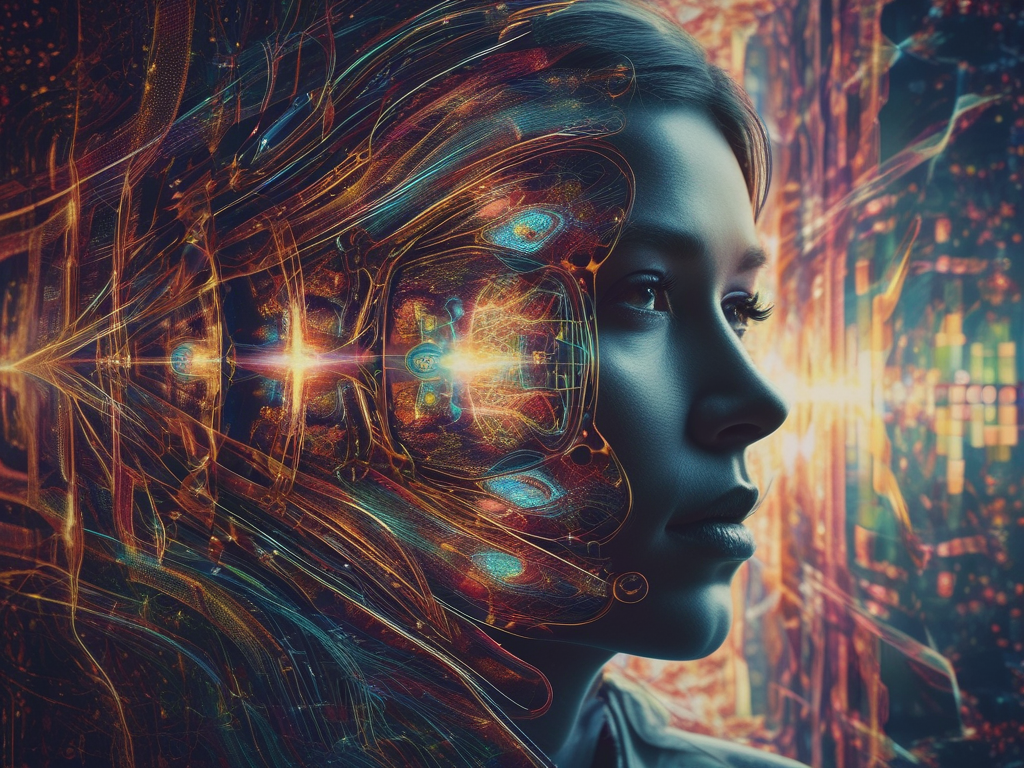

Shannon showed us how to communicate, Schrödinger showed us how matter thinks – and so far, that’s as far as the story has gone. Or has it? A group of scientists is now daring to approach quantum physics and neuroscience from a completely different direction. Their aim is to investigate whether there could be a correlation between quantum entanglement – the strange ability of entangled particles to seemingly communicate instantaneously across large distances – and the phenomenon of human consciousness.
One of the fundamental principles of quantum mechanics is the establishment of entanglement between pairs or sets of particles – a phenomenon in which the particles end up being correlated in a way that their physical separation no longer prevents them sharing their fate. If one entangled particle is measured to be in a certain state, these particles cannot be described independently of each other – the measurements always reveal they’re in the same state. If nature operates like this, it is hard to understand how we can locate a particle somewhere in space; more importantly, it is hard to understand how any two particles could ever interact with one another, something that Einstein considered inexplicable, or ‘spooky action at a distance’.
Now, some are saying that it also just might be doing so for consciousness itself. The brain, because its billions of neurons all cooperate with one another, passing electrical and chemical signals from one neuron to another, is a complex system that could conceivably exploit quantum effects.
One prominent idea is that entangled interactions between particles help to organize brain activity – in neural networks and elsewhere – in a way that would enable the rapid ‘signalling’ and information-pooling needed for conscious integration. With any luck, such a unified approach will eventually help us understand how the brain produces subjective experiences.
For now, the speculative nature of quantum consciousness is cradled by experiments interested in its consequences, as well as by theoretical work on quantum effects in biological systems (photosynthesis, bird navigation) that give cause to suppose that quantum effects in the brain are possible.
But the road to quantum physics and consciousness appears rocky. The delicate environment of the brain itself and the difficulty of isolating quantum effects against such a wave of measurement make this a forbidding challenge. To complicate matters, consciousness is an inherently subjective experience – and science has no good model for such things.
However, the leap to explain consciousness in quantum terms is still attracting scientists and philosophers – but they’re still struggling to make it. If they ever do manage it, the repercussions could be immense. This discovery may fundamentally alter our understanding of the human mind, challenge our perceived uniqueness in the cosmos, and even force quantum physicists to rethink their theories about the workings of the universe.
Whether quantum entanglement is the fundamental key to consciousness, this is a research programme that asks one of the most fundamental questions ever pondered, and represents a bold step towards an answer.
©️ The Rocky Mountain Dispatch LLC. 2024
Leave a Reply