
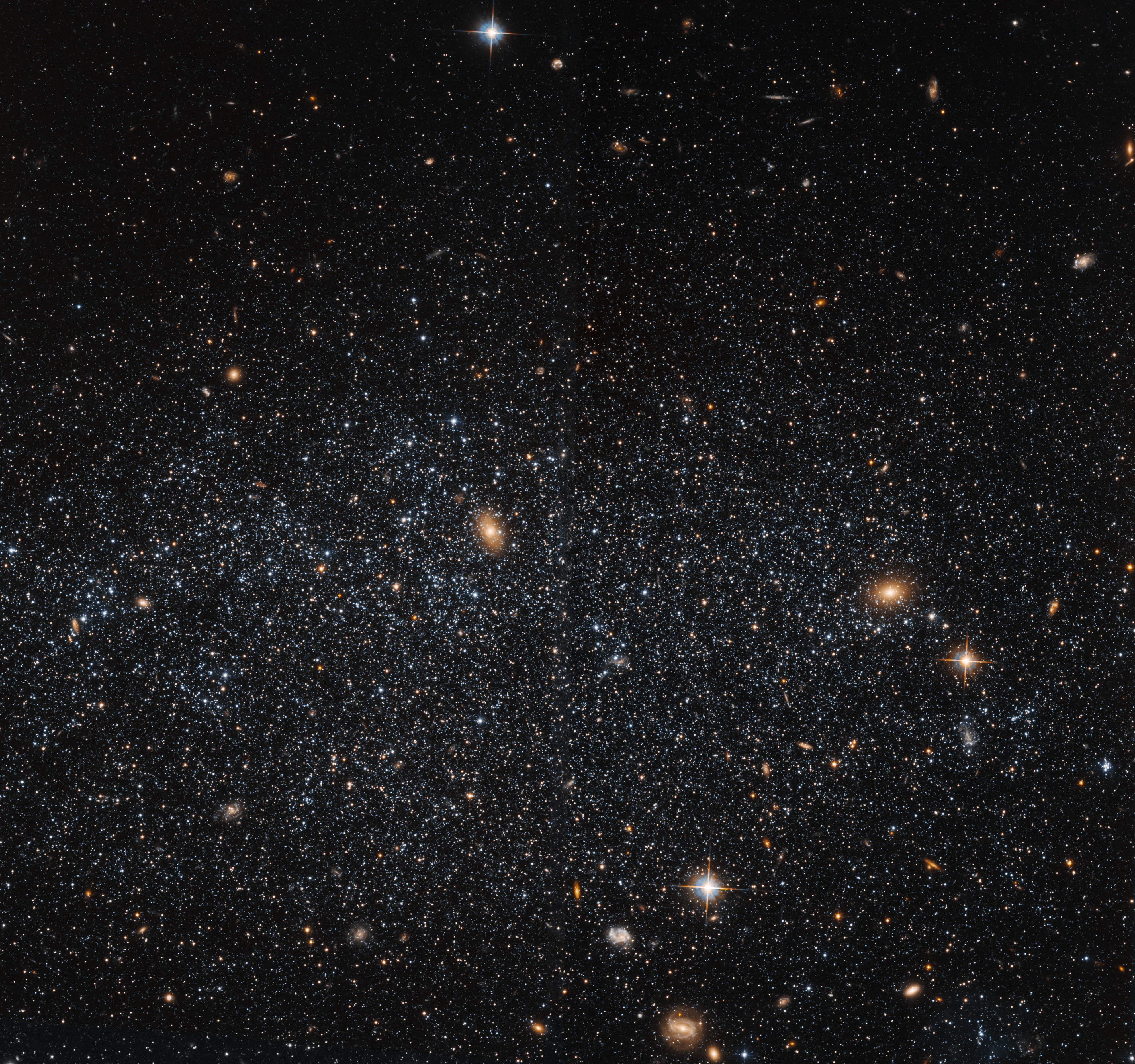

Hubble’s iconic cosmic portraits pale in comparison with its latest find, a dwarf galaxy that defies all expectations. Located 2.6 million light-years away, Leo A was assumed to be a textbook example of an irregular galaxy, a ball of gas without the disc-like spiral arms of large galaxies, nor the oblate spheroids of elliptical galaxies.
Leo A is a dwarf galaxy and part of the 10 million or so known in the Universe. These tiny systems are important. They serve as building blocks of their more massive cousins or brothers in some cosmological models, each representing some seam in profile, some rippling of the invisible cosmic web. Those origins and evolutionary byproducts can now be extracted from observations like these of Lewis’s dwarf galaxy. Leo A is also among the most isolated galaxies in our Local Group, an individualist free to linger undisturbed, at least by the standards of galactic society. Its seeming lack of civilized order and manicured profile earned it the nickname the ‘Leo dwarf irregular galaxy’.
Nevertheless, Hubble’s latest measurements have revealed just how challenging that world is to view. Looking in detail at the birth of a galaxy such as Leo A, astronomers undertaking four independent observing programmes have discerned the faintest hint of order within its apparently chaotic distribution of stars. It turns out that not even the biggest objects in the Universe are as random as they appear.
Key data for this discovery came from four Hubble programmes, including three dedicated to local studies of the star formation histories of nearby dwarf galaxies, and the fourth on measuring the Local Group’s mass by watching the motions of field dwarfs on the fringe of the Local Group.
This highlights just how important it is to keep observing even the most ordinary-seeming celestial objects. Hubble is already in twilight, but it still seems to be teaching us new things about the Universe at the most appropriate rate. If we already know about the extreme complexities we can expect to find out about once we delve very deep into the cosmos, we can expect to discover as much about the universe when we peer very closely into these more nearby objects.
The finding of structure in Leo A is further evidence that we will continue discovering the universal fabric for a long time to come. With each discovery, we find another piece of the cosmic jigsaw puzzle, coming closer each day to a complete picture of the awesome Universe in which we live.
©️ The Rocky Mountain Dispatch LLC. 2024
Leave a Reply