
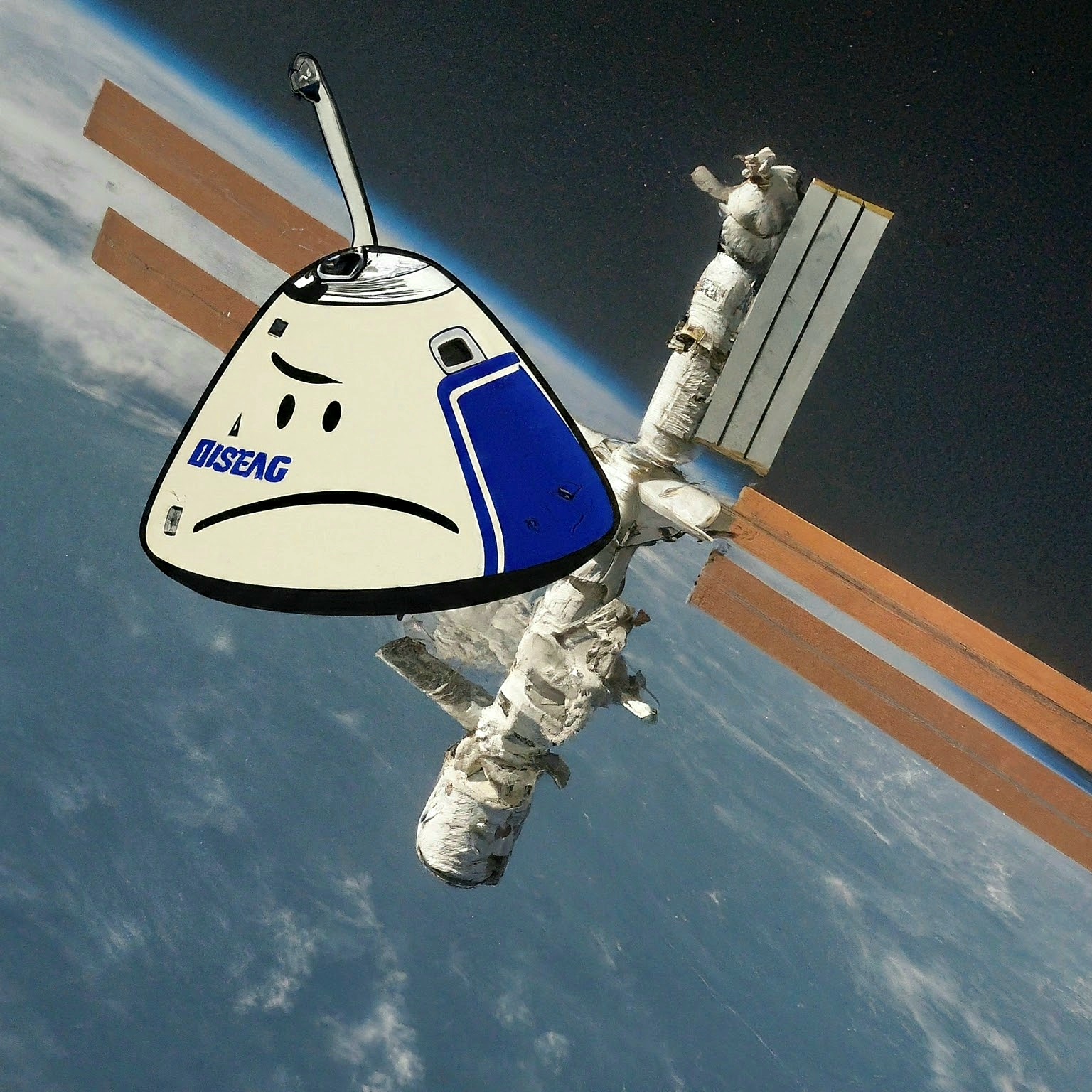

Boeing’s Starliner spacecraft, meant to usher in a new era of commercial spaceflight, is now at the center of a growing controversy (controversy not new to Boeing). NASA’s decision to return it to Earth unmanned after discovering thruster malfunctions during its stay at the ISS has raised serious questions about the aerospace giant’s ability to deliver on crucial projects. The incident echoes the quality control issues that have plagued Boeing in recent years, notably with the 737 MAX aircraft (see also article on the door plug debacle).
The Starliner’s problems are multi-faceted. While the specific cause of the thruster malfunctions is still under investigation, preliminary findings point to potential software glitches and component failures. These issues, coupled with previous delays and cost overruns in the Starliner program, paint a picture of a project struggling to meet expectations. Critics argue that Boeing’s vast size and complex organizational structure may be hindering effective communication and problem-solving, leading to delays and technical glitches. Could it be time to break up Boeing into smaller, more nimble companies?
Moreover, the Starliner’s troubles underscore a broader concern about Boeing’s approach to quality control. The company has faced scrutiny for its handling of safety issues in the past, with the 737 MAX crisis serving as a stark reminder of the consequences of prioritizing production speed over thoroughness. The Starliner incident raises questions about whether Boeing has truly learned from its past mistakes.
In contrast, SpaceX, with its leaner structure and iterative design approach, has consistently demonstrated a capacity for rapid innovation and adaptation. While not immune to setbacks, SpaceX’s success in achieving milestones like reusable rockets and regular crewed missions highlights a different approach to quality control and project management.
The repercussions of the Starliner’s setbacks extend beyond the immediate mission. The incident is a blow to Boeing’s reputation and its aspirations in the commercial space race. It also highlights the challenges faced by established aerospace giants in adapting to a rapidly evolving industry where innovation and agility are paramount.
In conclusion, the Starliner’s troubled journey serves as a cautionary tale about the importance of robust quality control processes in complex engineering projects. The incident raises concerns about Boeing’s ability to deliver on critical space missions and casts a shadow over its future in the commercial space sector. While the company has vowed to investigate the root causes of the Starliner’s problems and implement corrective measures, the incident serves as a stark reminder of the high stakes involved in space exploration and the need for unwavering commitment to safety and reliability.
©️ The Rocky Mountain Dispatch LLC. 2024
Leave a Reply