
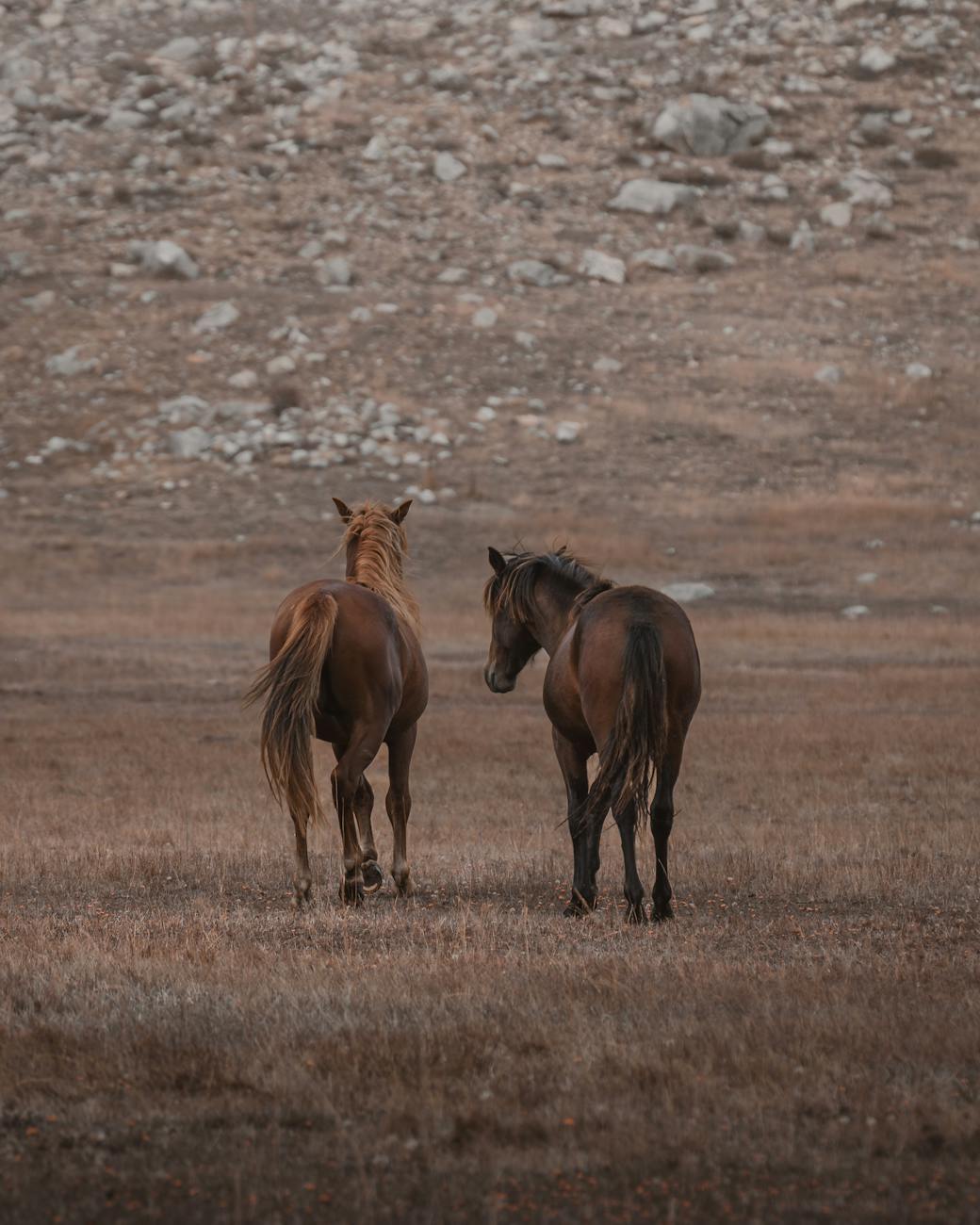


In one of the most picturesque regions on the North American continent – the American West – the wild mustang is fighting an uphill battle for survival. This symbol of freedom and resilience, the progeny of the horses that came to the continent centuries ago, is under assault like never before.
Roundups, linked to a mix of commercial interests and misperceptions, are commonplace: helicopters pursue these magnificent animals into temporary panels where they catch them and sort them into holding pens to be shipped to feed lots, often suffering injuries and psychological trauma that haunt them the rest of their lives.
The federal Bureau of Land Management (BLM), the agency tasked with protecting wild horses and burros, says that it has to round up the horses and burros because they’re overpopulated, but many people, including experts and advocates, disagree. They insist that livestock and big game animals on public land far outnumber wild horses, and the problems that wild horses supposedly cause are largely exaggerated while their valuable ecological attributes are almost always ignored.

At the core of the problem is the desire by a variety of competing users to gain control over these public lands. Ranchers, miners and other interests often lobby to maximize access to these resources. Wild horses are simply a convenient scapegoat – they consume forage and water that could be used by other interests.
The Wild Free-Roaming Horses and Burros Act of 1971 was passed to protect them and their habitats, but, critics argue, the BLM has never taken its mandate seriously, always favoring commercial interests over the protection of America’s national heritage.
The effects of these roundups are devastating. Wild horses and burros are torn from family groups and driven into chaotic holding pens. Stallions have their testicles removed and mares receive injections of contraceptives that interfere with their natural behaviors.
Well-meaning adoption programmes are also backfiring. Adopters have a year to sell horses free of charge before the law kicks in – and that means the animals are very likely to end up at slaughterhouses.
Although the fight to protect wild horses is far from over, advocates are pushing for legislative reforms, including the SAFE Act, which would close the slaughter loophole, and for the BLM to be more transparent and accountable.
The fate of America’s wild horses reflects the larger human tendency to prioritize our own needs over the preservation of nature, and to demand that wildlife submit to human whims. We must do better.
©️ The Rocky Mountain Dispatch LLC. 2024

Leave a Reply