
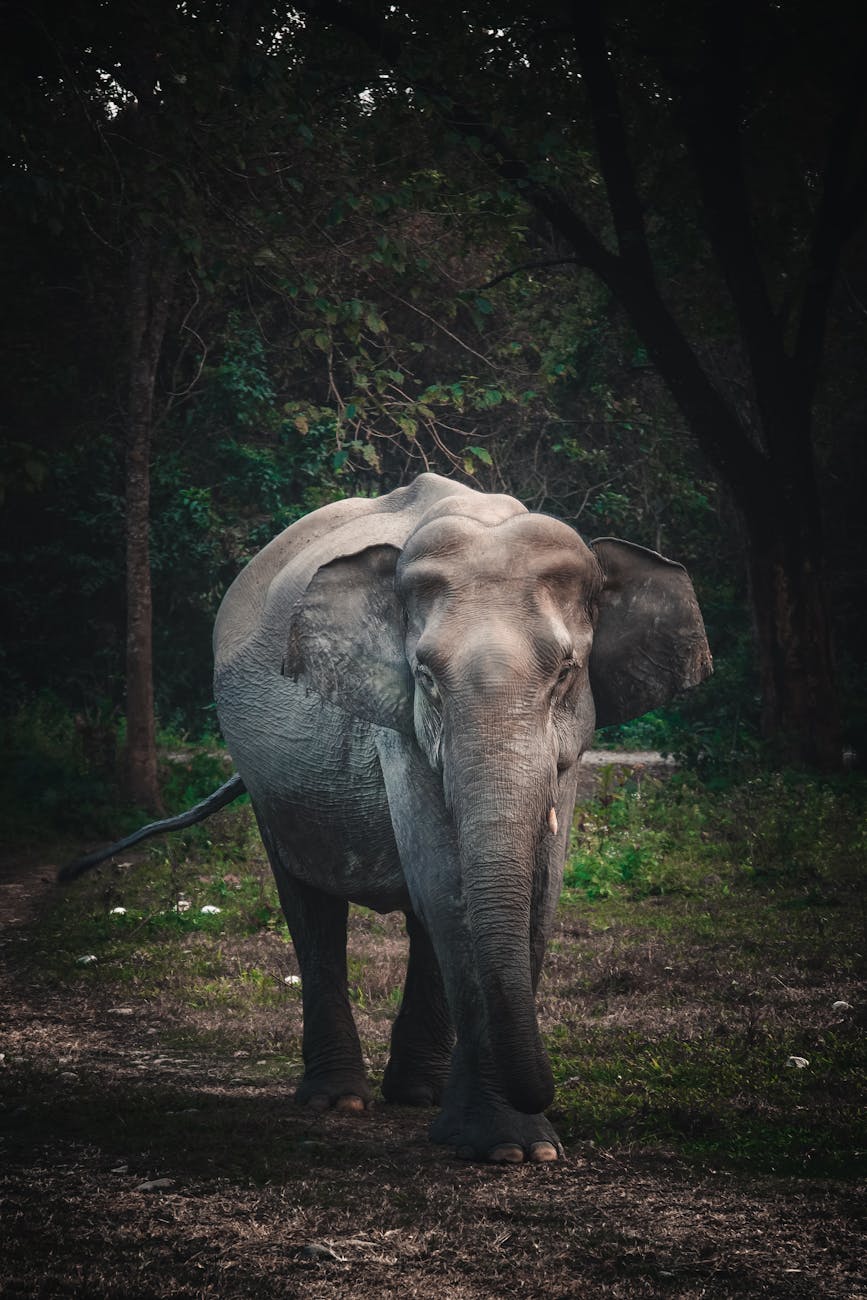

Boulder, CO – In a case that could redefine the boundaries of legal personhood, the Colorado Supreme Court heard arguments Thursday on whether five elephants residing at the Cheyenne Mountain Zoo should be granted the right to challenge their captivity. The Nonhuman Rights Project (NhRP), an animal rights organization, brought the case forward, asserting that elephants, with their demonstrated intelligence and complex social structures, deserve the autonomy afforded to humans under habeas corpus law.
The courtroom at the University of Colorado School of Law buzzed with anticipation as Jake Davis, attorney for the NhRP, presented his case. He argued that elephants, as sentient beings capable of suffering and emotional distress, are entitled to the same fundamental rights as humans, including freedom from unlawful confinement. Davis painted a grim picture of the elephants’ existence at the zoo, claiming their confinement leads to psychological damage and an inability to engage in natural behaviors.
However, the justices met Davis’s arguments with skepticism, peppering him with questions about the implications of extending personhood to animals. Justice Melissa Hart raised concerns about the slippery slope, questioning where the line would be drawn. “If elephants are granted personhood,” she queried, “what about chimpanzees, dolphins, or even beloved pets?”
Davis countered by emphasizing the unique cognitive abilities and social needs of elephants, drawing parallels to historical struggles for personhood by marginalized human groups. He argued that legal personhood should not be confined to biological categories, but rather extend to any being capable of self-awareness and complex emotional experiences.
Representing the Cheyenne Mountain Zoo, former state Attorney General John Suthers countered that the NhRP’s arguments were not only legally unsound but also threatened to undermine existing animal welfare laws. He stressed that the zoo operates in accordance with strict regulations and provides excellent care for its elephants. Suthers further argued that the legislature, not the judiciary, is the appropriate venue for determining the scope of legal personhood.
The justices appeared to lean towards Suthers’s position, expressing concerns about the potential ramifications of such a radical shift in legal thinking. Chief Justice Monica Marquez questioned whether granting personhood to animals would open a Pandora’s box of legal challenges, potentially destabilizing established norms and creating a logistical nightmare for the courts.
A decision is expected in the coming months, and its implications could reverberate far beyond the walls of the Cheyenne Mountain Zoo. If the court rules in favor of the NhRP, it would mark a watershed moment in the animal rights movement, potentially paving the way for similar challenges across the country. However, a ruling against the NhRP would likely reaffirm the current legal status of animals as property, leaving their fate in the hands of human guardians and lawmakers.
This case has ignited a fierce debate about the nature of consciousness, the ethical treatment of animals, and the very definition of personhood. While the elephants at the center of the controversy remain unaware of the legal battle being waged on their behalf, their plight has captured the attention of a nation grappling with its relationship to the natural world.
©️ The Rocky Mountain Dispatch LLC. 2024
Leave a Reply