
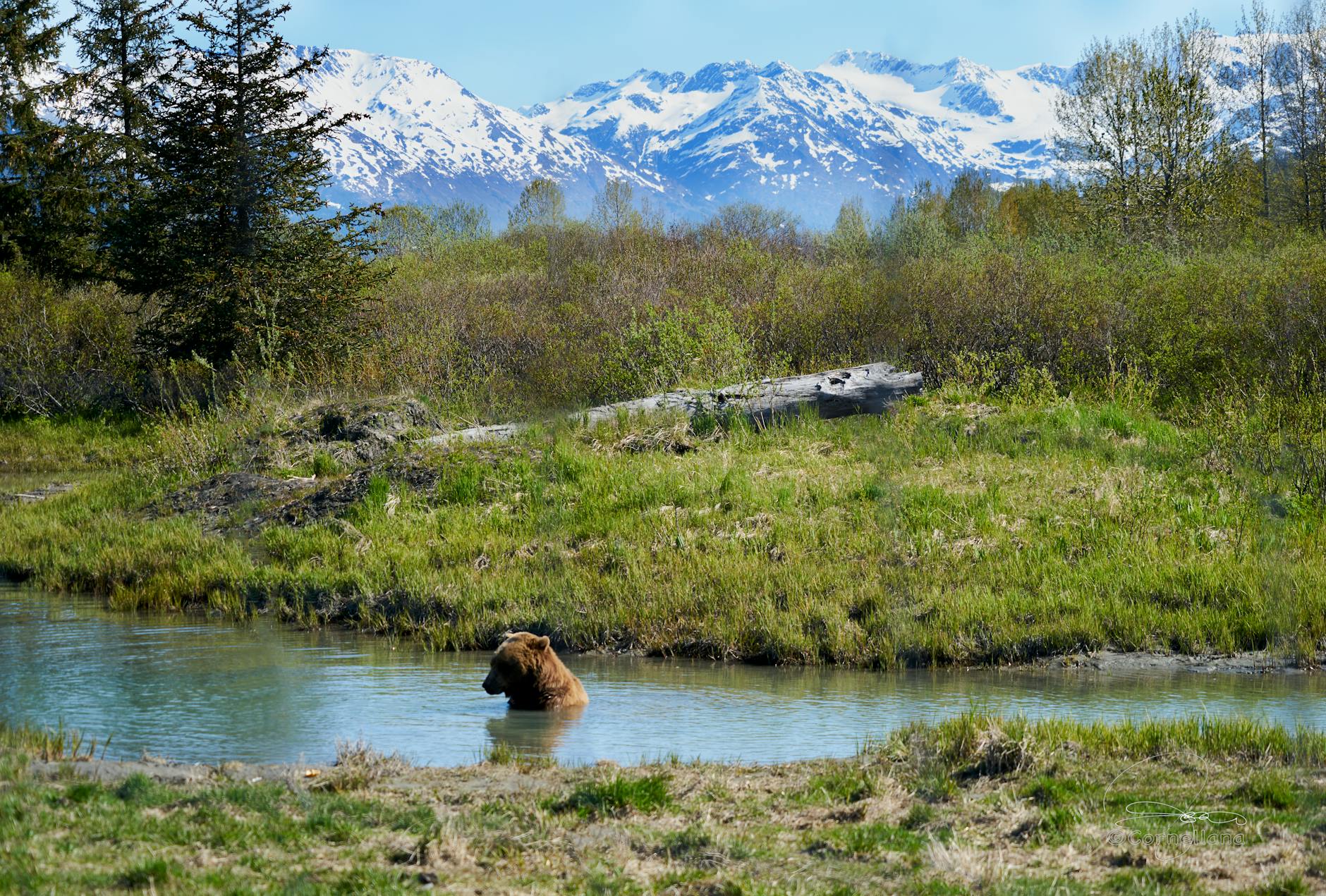

Yellowstone National Park, WY – In a groundbreaking initiative to bolster the genetic diversity of the Greater Yellowstone Ecosystem’s (GYE) grizzly bear population, wildlife officials embarked on a unique experiment this past summer. Two young grizzly bears, a three-to-four-year-old female and a four-to-five-year-old male, were carefully selected from the Northern Continental Divide Ecosystem (NCDE) and translocated to the heart of Yellowstone.
The ambitious project, spearheaded by Montana Fish, Wildlife & Parks (FWP) in collaboration with the National Park Service and the Wyoming Game & Fish Department, aimed to bridge the genetic gap between isolated grizzly populations.
“The goal was to jumpstart a natural process,” explained Ken McDonald, head of FWP’s Wildlife Division. “While both the NCDE and GYE have thriving grizzly populations, the Yellowstone grizzlies have been isolated, limiting genetic exchange.”
The translocation process was a delicate operation. The bears, chosen for their age, health, and lack of conflict history, were captured near East Glacier in July and transported overnight to their new home. The female was released in the remote Blackrock Creek drainage west of Dubois, Wyoming, while the male was taken by boat to the southern end of Yellowstone Lake.
Each bear was fitted with a GPS collar, allowing researchers to meticulously track their movements. The data paints a fascinating picture of their integration into the new environment.
“The female’s movements are expansive, marked by wide loops as she explores her surroundings,” described Cecily Costello, FWP grizzly bear researcher. “The male, on the other hand, seems to have established a more defined territory, with his movements concentrated in a smaller area.”
Costello expressed satisfaction with the bears’ adaptation, noting that both have remained within the GYE’s remote wilderness areas and have recently entered dens for the winter.
This translocation effort comes on the heels of petitions by Montana and Wyoming to delist grizzly bears in their respective ecosystems, arguing that recovery goals have been met and robust management frameworks are in place.
“The success of this translocation underscores our commitment to grizzly bear conservation,” McDonald asserted. “It’s a testament to the collaborative efforts of multiple agencies working to ensure the long-term health of these iconic animals.”
The project is not just a conservation milestone but also a scientific endeavor, offering invaluable insights into bear behavior and dispersal patterns. As researchers continue to monitor the bears’ movements and genetic contributions, the results will inform future management strategies and potentially pave the way for similar translocations.
Leave a Reply