
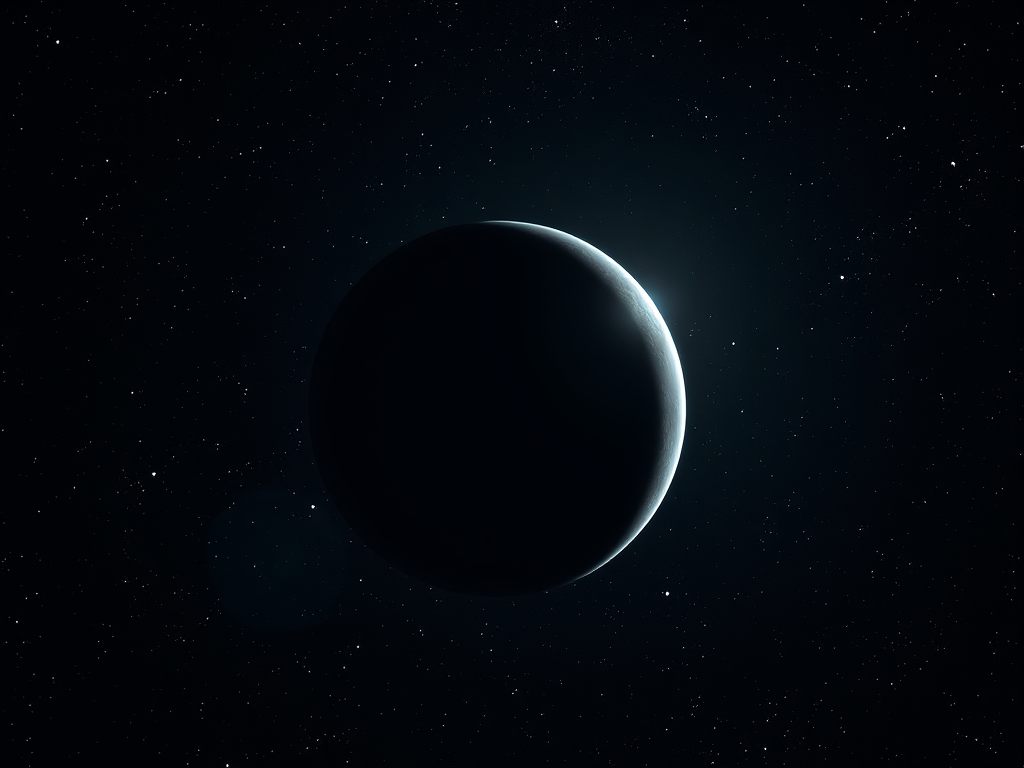

For years, astronomers have been intrigued by the possibility of a hidden planet lurking in the outer reaches of our solar system, a world dubbed “Planet Nine.” The evidence for its existence is compelling, but the search has been long and challenging. Now, with the advent of new technology, we may be on the verge of finally uncovering the truth about this enigmatic celestial body.
The story of Planet Nine begins with the demotion of Pluto from planet status in 2006. Astronomer Mike Brown, who played a key role in Pluto’s reclassification, found himself at the center of a cosmic controversy. To redeem himself, Brown embarked on a quest to find a new ninth planet, one that would truly earn its place in our solar system’s lineup.
The first clues emerged from the study of trans-Neptunian objects (TNOs), icy bodies that orbit the sun beyond Neptune. Some of these objects, like Sedna and 2012 VP113, have unusually elongated and tilted orbits, suggesting they are being influenced by the gravity of a massive, unseen object.
Brown and his colleagues calculated that this hypothetical planet would be several times the mass of Earth and located hundreds of times farther from the sun than our planet. But finding such a distant and faint object is like searching for a needle in a cosmic haystack.
Despite numerous attempts, Planet Nine has remained elusive. Some scientists have even proposed alternative explanations for the strange orbits of TNOs, such as a massive ring of debris or a passing star. But none of these theories have been entirely convincing.
Now, a new generation of telescopes is poised to revolutionize the search for Planet Nine. The Vera C. Rubin Observatory in Chile, set to begin operations in 2025, will scan the entire southern sky with unprecedented sensitivity. If Planet Nine exists, Rubin is almost certain to find it, or at least provide strong evidence for its existence.
The anticipation is palpable. If Planet Nine is real, its discovery would be a landmark event in astronomy, reshaping our understanding of our solar system’s formation and evolution. It would also be a testament to the power of human curiosity and our relentless pursuit of knowledge about the universe we inhabit.
The coming years will be an exciting time for planetary science. With the Rubin Observatory and other advanced instruments at our disposal, we are entering a new era of discovery. The secrets of the outer solar system, including the mystery of Planet Nine, may soon be revealed.
©️ The Rocky Mountain Dispatch LLC. 2024
Leave a Reply