
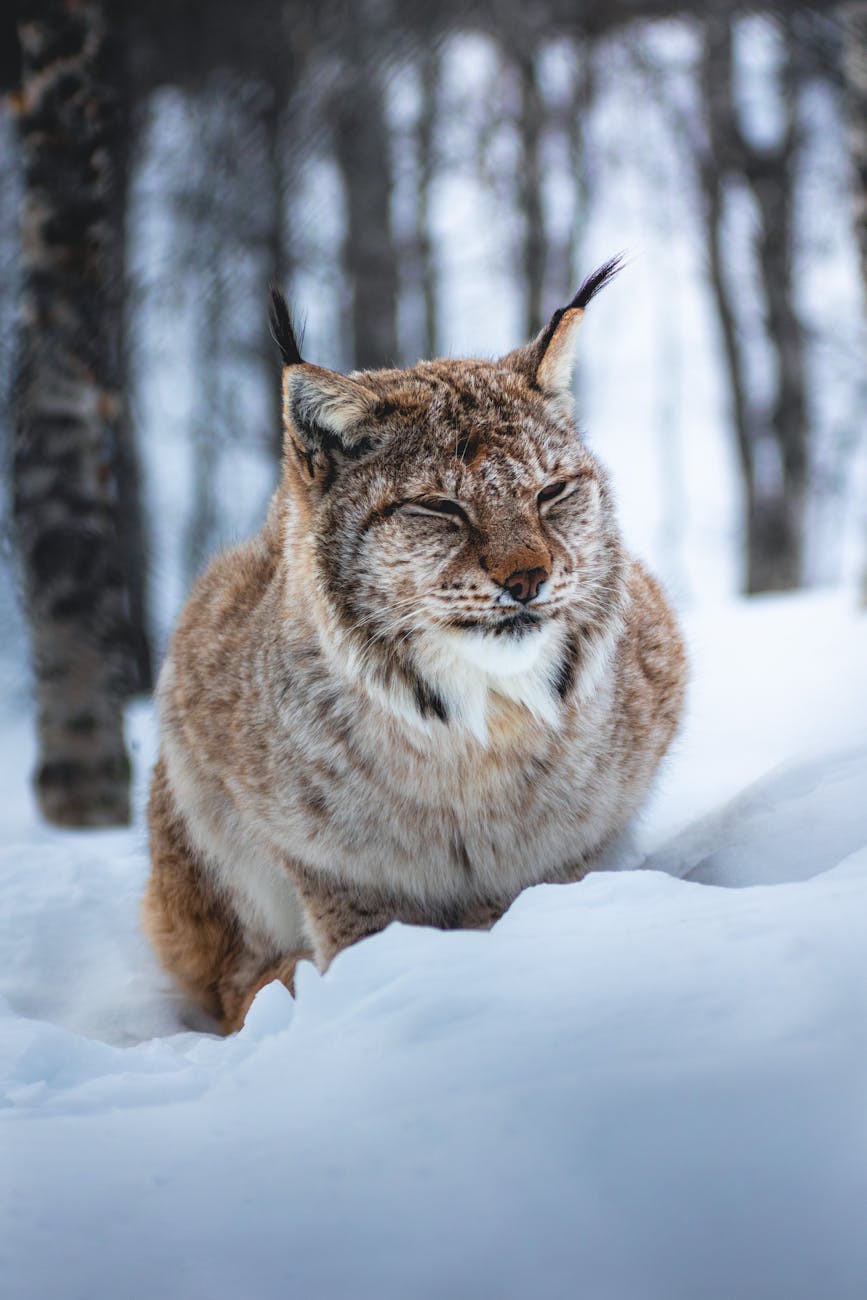

New research highlights the challenges of conserving Canada lynx in a landscape increasingly affected by natural and human disturbances.
The Southern Rocky Mountains, a haven for winter recreation and home to a reintroduced population of Canada lynx, are facing increasing challenges from both natural and human-caused disturbances. A recent study published in the journal Biodiversity and Conservation has shed light on the complex situation facing lynx conservation in this region.
Mapping Lynx Habitat
Researchers used an ensemble species distribution model to map the areas most likely to support lynx populations. This model was built on a variety of factors, including climate, topography, vegetation, and human influences. The results showed that suitable lynx habitat in the Southern Rockies is relatively limited and fragmented, concentrated mainly in the San Juan and Sawatch mountain ranges.
Disturbances Overlap With Lynx Habitat
The study also examined the extent to which various types of disturbances overlapped with lynx habitat. Natural disturbances, such as insect outbreaks and wildfires, were found to be the most significant, affecting 37% of likely lynx habitat. Spruce beetle outbreaks, in particular, have impacted a quarter of the suitable lynx habitat. Although the overlap with wildfire disturbance was relatively low (5%), future burns represent a considerable risk to lynx habitat over the coming decades.
Human-caused disturbances, including ski resort development and urbanization, also impacted lynx habitat, but to a lesser degree than natural disturbances. Interestingly, the study found that protected areas, such as national parks and wilderness areas, overlapped significantly with lynx habitat. This suggests that these protected areas may offer a buffer against some forms of human disturbance.
Conservation Implications
The findings of this study have important implications for lynx conservation in the Southern Rockies. The authors stress the need for management approaches that consider the complex interplay of natural and human disturbances in the region. They also highlight the importance of protected areas in providing refuge for lynx and suggest that active management within these areas might be necessary to mitigate the risk of large-scale disturbances, such as wildfires.
A Call for Adaptive Management
The challenges facing lynx conservation in the Southern Rockies are not unique. As climate change continues to alter disturbance regimes and human development encroaches on natural landscapes, the need for adaptive management strategies that prioritize the conservation of sensitive species will only become more critical. The research presented in this study provides a valuable foundation for such efforts.
©️ The Rocky Mountain Dispatch LLC. 2025
Leave a Reply