
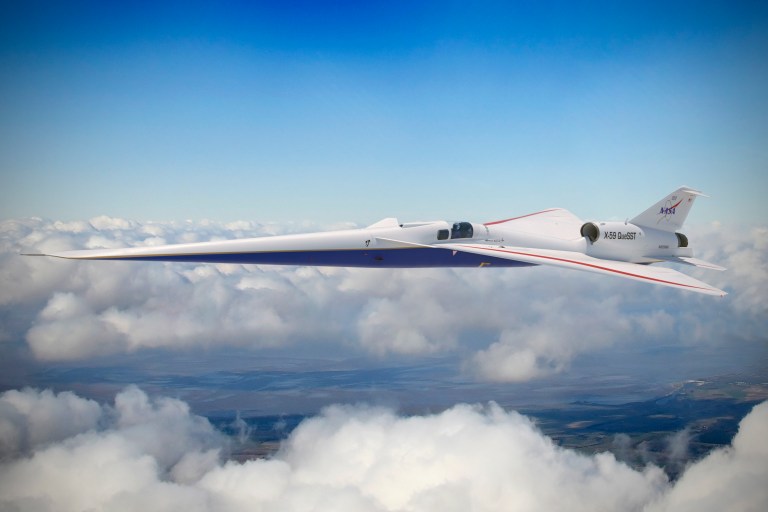

NASA is making strides in supersonic flight technology with its X-59 experimental aircraft, designed to break the sound barrier without producing the disruptive sonic booms typically associated with such speeds. The X-59, developed in collaboration with Lockheed Martin, is part of NASA’s Quiet SuperSonic Technology (Quesst) program, which aims to revolutionize air travel by enabling supersonic flights over land.
The X-59 is equipped with a modified General Electric F414-GE-100 jet engine, capable of reaching speeds of Mach 1.4 (approximately 925 mph) at an altitude of 55,000 feet. The aircraft’s distinctive 35-foot-long nose cone plays a crucial role in reducing the shock waves that create sonic booms, resulting in a quieter “sonic thump” instead.
Recent tests have demonstrated the X-59’s ability to perform engine runs with its afterburner, verifying the engine’s performance and readiness for flight testing. The next phase involves integrated systems testing, engine runs, and taxi testing before the aircraft takes its first flight later this year.
NASA plans to conduct several flight tests with the X-59, flying over select residential areas in the United States to gather data on public perception of the quieter sonic thump. The data collected will be crucial in helping regulators reconsider the current ban on commercial supersonic flight over land, potentially opening new markets for faster air travel.
The X-59 project represents a significant step forward in supersonic aviation, promising to reduce flight times dramatically while minimizing noise pollution. If successful, it could pave the way for a new era of commercial supersonic travel, bringing destinations closer together in less time.
©️ The Rocky Mountain Dispatch LLC. 2025
Leave a Reply