
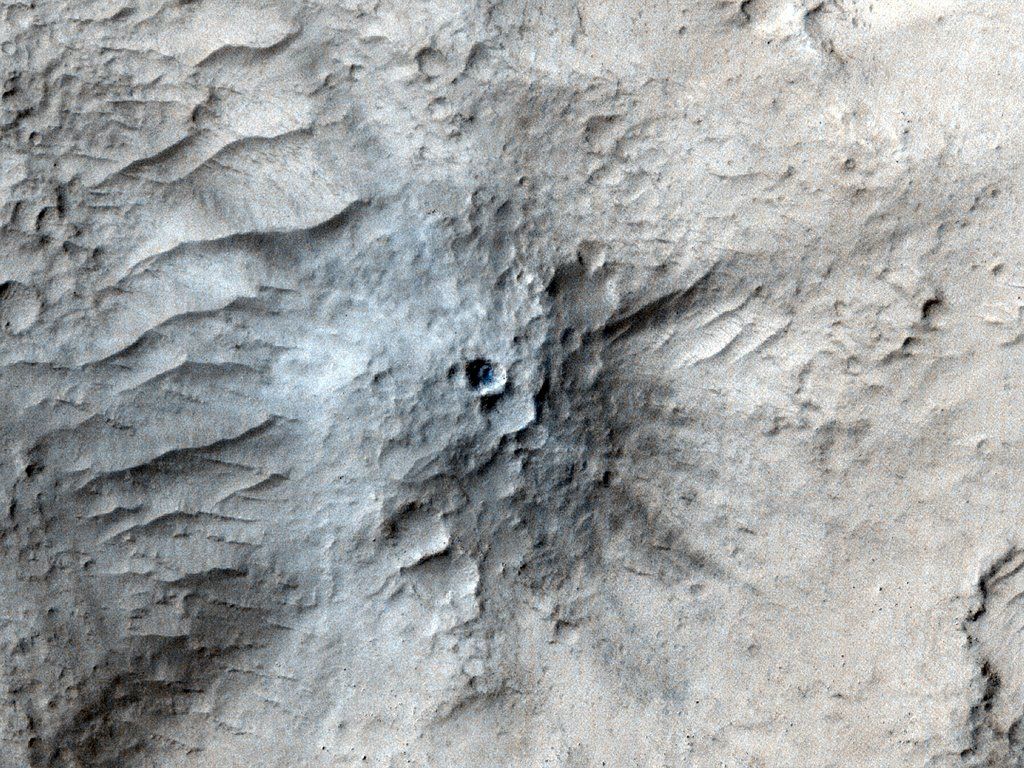

A recent study published in Geophysical Research Letters has unveiled a groundbreaking discovery on Mars: 123 new impact craters have been identified using a machine learning-enabled approach. This marks the first comprehensive catalog of impacts that occurred within a 50-degree radius of the InSight lander during its mission.
The implications of this discovery are far-reaching. Researchers estimate an impact rate of 2.7 × 10⁻⁶/km2/year for craters larger than 3.9 meters in diameter. This rate is significantly higher than previous estimates based on orbital data.
The study also reveals potential matches between 49 seismic events and specific impact craters. One notable match involves a 21.5-meter crater near Cerberus Fossae and a cluster of seismic events in the same region. This suggests that the distances for some seismic events may have been underestimated.
The identification of these new impact craters and their potential seismic matches provides valuable insights into the dynamics of the Martian surface and the behavior of seismic waves in the Martian subsurface. This information will be crucial for refining models of Mars’ interior structure and improving the accuracy of seismic event location estimates.
The machine learning-enabled approach used in this study demonstrates the power of advanced technology in planetary science. By automating the search for new impact craters, researchers can analyze vast amounts of orbital image data more efficiently and effectively. This opens up new possibilities for understanding the history and evolution of Mars and other planetary bodies.
The new impact catalog is a valuable resource for the planetary science community. It will enable more detailed studies of individual impact events and their effects on the Martian environment. This knowledge will be essential for planning future missions to Mars and for understanding the potential habitability of the Red Planet.
©️ The Rocky Mountain Dispatch LLC. 2025
Leave a Reply