
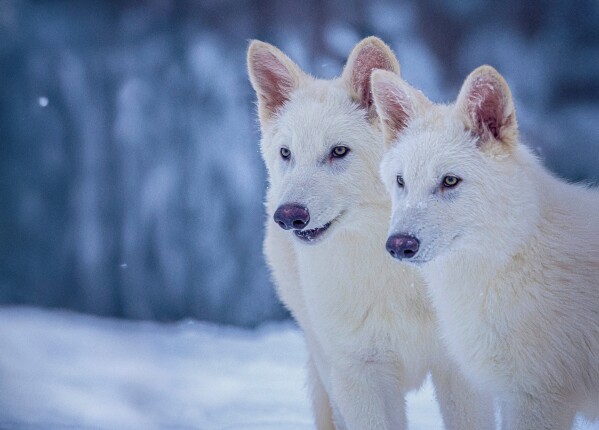

In a groundbreaking achievement, Colossal Biosciences, a Dallas-based biotechnology company, has successfully brought back the dire wolf (Canis dirus), an extinct species that roamed the Americas during the Ice Age. This scientific feat marks the world’s first instance of de-extinction, opening new avenues for genetic engineering and conservation.
The De-Extinction Process
The dire wolf’s revival stems from DNA extraction performed on fossilized remains, including a 13,000-year-old tooth and a 72,000-year-old skull. Using this genetic material, Colossal Biosciences reconstructed the dire wolf genome and modified gray wolf (Canis lupus) DNA—its closest living relative—through 20 precise genomic edits. This process represents the most extensive genetic modification ever achieved in a vertebrate species.
Three dire wolf pups, Romulus, Remus, and Khaleesi, were born via surrogate domestic dogs. They exhibit traits characteristic of their ancient ancestors, such as snowy white fur and distinctive pack behavior. Now residing in a protected 2,000-acre nature preserve, these wolves symbolize both a scientific marvel and a step into uncharted ethical territory.
Differences Between Dire Wolves and Gray Wolves
To appreciate this achievement, it’s important to understand the key differences between dire wolves and their modern-day relatives, gray wolves:
1. Physical Attributes:
Dire wolves were larger and more robust, with heavier bones and a sturdier build, enabling them to hunt megafauna such as mammoths and saber-toothed cats. Gray wolves, in contrast, are lighter and more agile, adapting to hunt smaller mammals.
2. Skull and Teeth:
Dire wolves had broader skulls, powerful jaws, and larger teeth adapted for crushing bones—a useful trait for scavenging and preying on large animals. Gray wolves possess narrower skulls and teeth suited for a more varied diet.
3. Geographic Range:
Dire wolves were native to the Americas, thriving in regions from Canada to South America during the Ice Age. Gray wolves, with a more adaptable nature, have a global presence in diverse habitats, ranging from North America to Eurasia and Africa.
4. Dietary Preferences:
Dire wolves were apex predators focused on megafauna, while gray wolves adapted their diet to include smaller mammals, surviving through ecological changes.
5. Survival vs. Extinction:
Dire wolves disappeared around 13,000 years ago due to climate shifts and the decline of large prey. Gray wolves endured, adapting to new environments and changing human interactions.
Conservation Implications
Colossal Biosciences co-founder and CEO Ben Lamm emphasized the broader potential of this achievement. Beyond bringing extinct species back to life, the technology could bolster conservation efforts for endangered animals, such as the red wolf (Canis rufus). The company is also exploring the revival of other extinct creatures, including the woolly mammoth and Tasmanian tiger.
While the scientific community lauds this breakthrough, some experts remain skeptical. Dr. Julie Meachen, a specialist in wolves, argues that these recreated wolves may not be true dire wolves but rather genetically modified gray wolves with similar traits. Despite this critique, the project raises thought-provoking questions about the limits and possibilities of science in addressing biodiversity loss.
Ethical and Ecological Considerations
The revival of dire wolves sparks global interest but also scrutiny regarding its ethical and ecological impacts. Could de-extinction inadvertently disrupt ecosystems? How can humanity responsibly manage the balance between scientific progress and natural preservation?
As dire wolves roam again after thousands of years, this achievement symbolizes humanity’s ability to reach back into prehistoric history to shape the future of conservation. The return of these iconic canids prompts awe and wonder—alongside careful consideration of science’s enduring responsibility.
©️ The Rocky Mountain Dispatch LLC. 2025
Leave a Reply