
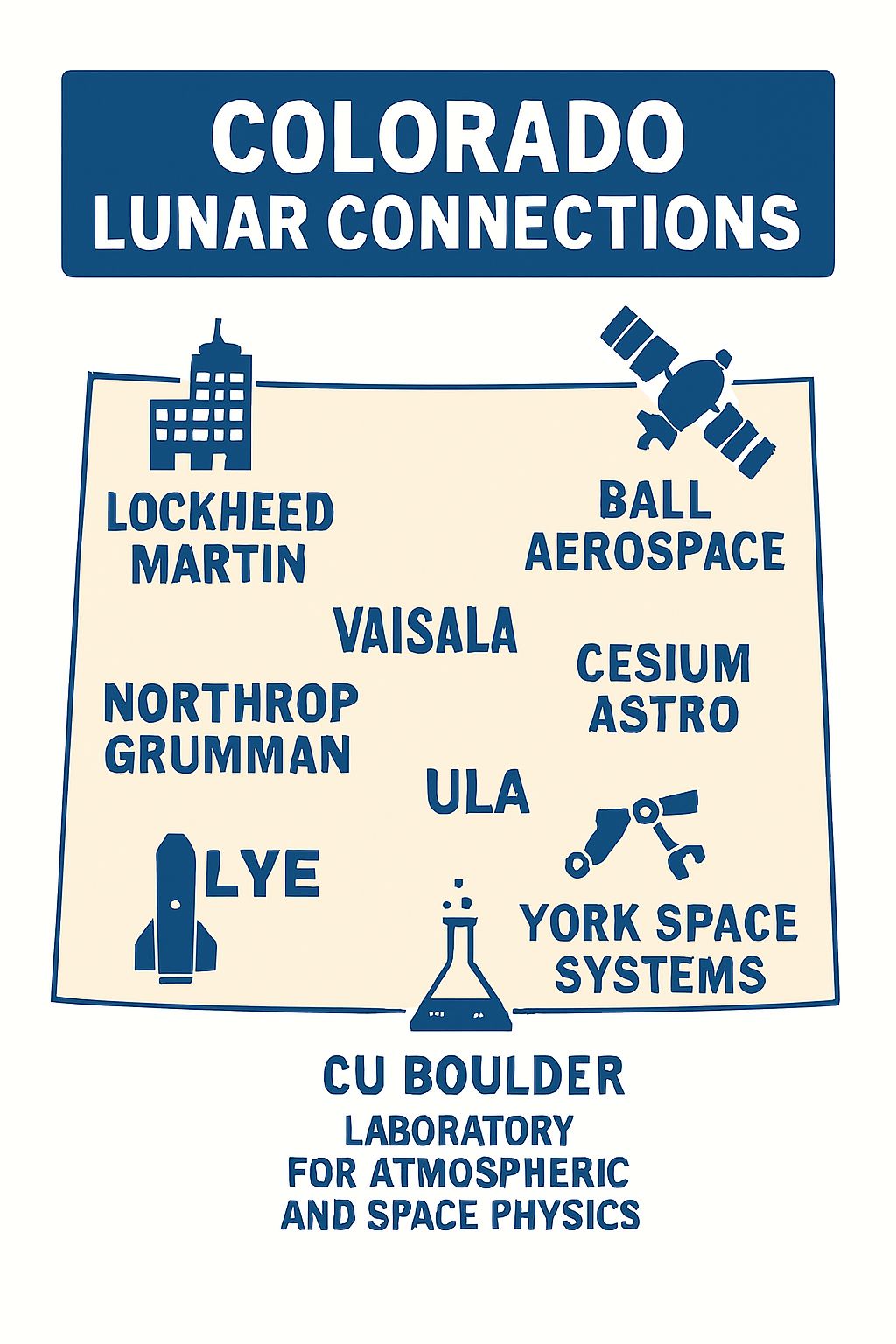

In the shadow of the Moon, Colorado’s aerospace legacy gleams. From Lockheed Martin’s propulsion systems to CU Boulder’s space physics breakthroughs, our state has quietly become one of the most influential players in lunar exploration. The Chandrayaan-4 mission may be India’s triumph, but the technologies that make such missions possible often trace back to Colorado’s soil.
And yet, this week, that soil shook.
TeKnowledge, a global tech firm specializing in AI and cybersecurity, announced it will lay off over 300 employees in Colorado Springs. Just days earlier, the federal government finalized its decision to relocate U.S. Space Command headquarters from Colorado Springs to Huntsville, Alabama—a move that could cost the state over 1,400 jobs and billions in economic impact.
These aren’t isolated tremors. They’re part of a tectonic shift.
Aerospace Isn’t Just Industry—It’s Identity
Colorado is home to more than 2,000 aerospace companies, supporting over 280,000 direct and indirect jobs. Our universities fuel innovation, our military bases anchor national security, and our tech firms push the boundaries of what’s possible in orbit and beyond. The diagram above makes this clear: Lockheed Martin, Sierra Space, Ball Aerospace, Northrop Grumman, York Space Systems, CesiumAstro, Vaisala, ICEYE, United Launch Alliance (ULA), and CU Boulder’s LASP aren’t just logos—they’re lifelines.
But lifelines fray when policy fails.
Losing TeKnowledge Is a Warning Shot
TeKnowledge’s layoffs are a symptom of a deeper vulnerability. In a letter to the state, the company cited “changing client demand, global tech shifts, and economic conditions.” Translation? Colorado’s business climate is no longer a guaranteed draw. When firms like TeKnowledge downsize, it’s not just about lost jobs—it’s about lost momentum.
And when Space Command leaves, it’s not just about relocation—it’s about reputation.
The Cost of Complacency
Colorado received $48 billion in federal contracts last year. But contracts don’t equal commitment. As other states offer lower costs of living, streamlined regulations, and aggressive incentives, Colorado risks becoming a launchpad without a landing zone.
J.J. Ament of the Denver Metro Chamber of Commerce put it bluntly: “Other states would love to have not just Space Command—they’d love to have any number of Colorado companies relocate.”
We can’t afford to let them.
What Needs to Change
This is a state issue. Not just for lawmakers, but for every Coloradan who believes in our future. We need:
Pro-business policies that retain high-tech firms and attract new ones
Investment in STEM education to build a resilient workforce
Infrastructure and housing reform to support growing industries
Bipartisan advocacy to keep federal assets like Space Command rooted here
Colorado’s lunar legacy is real. But legacy alone won’t keep us competitive.
From the Moon to Main Street
The Moon may feel distant, but the consequences of losing our aerospace edge are close to home. Every layoff, every relocation chips away at the ecosystem that makes Colorado a spacefaring state.
We are not just watching rockets—we’re building them. And if we want to keep building, we must act now.
Maybe our common goal as Coloradans is space. So the next time you look up at the Moon rising over the Rockies, remember: Colorado isn’t just part of the journey—we’re essential to getting there.
©️ The Rocky Mountain Dispatch LLC. 2025
Leave a Reply