
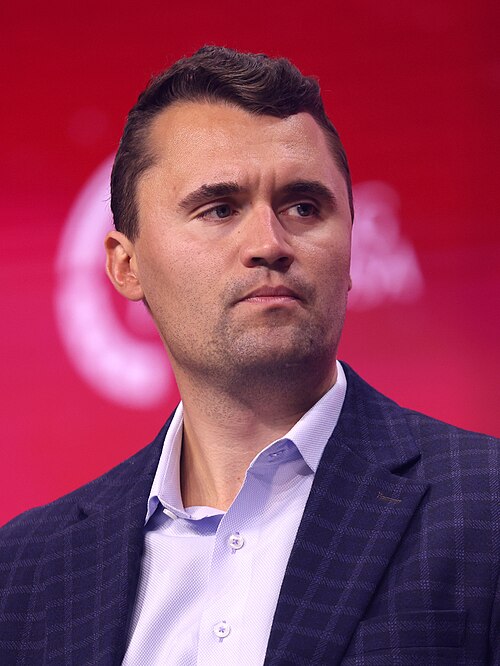

Charlie Kirk, founder of Turning Point USA and one of the most recognizable voices in modern conservative activism, was shot and killed on September 10, 2025, during a campus event at Utah Valley University. Authorities have confirmed that the shooting is being investigated as a politically motivated assassination. Kirk was addressing students as part of his “American Comeback” tour, a nationwide effort to engage young Americans in civic debate and challenge progressive orthodoxy. His death has sent shockwaves through the political and cultural landscape, raising urgent questions about the state of public discourse, the safety of political figures, and the role of journalism in moments of national trauma.
Kirk’s rise to prominence was emblematic of a new generation of conservative engagement—one that blended Reagan-era principles with the immediacy of social media and the combative tone of modern political commentary. Though critics often conflated his style with the more populist strains of conservatism, Kirk consistently framed his message around constitutional liberty, limited government, and the moral clarity of Western tradition. His presence on college campuses was polarizing, but it was also undeniably effective in drawing attention to the ideological imbalance many students perceive in higher education.
The political implications of Kirk’s assassination are profound. In recent years, the United States has witnessed a troubling increase in politically motivated violence. From congressional baseball shootings to threats against Supreme Court justices, the boundaries of civil disagreement have eroded. Kirk’s death is not just a tragedy—it is a warning. When political figures are targeted for their beliefs, the very foundation of democratic society is shaken. The fact that Kirk was killed while engaging in open dialogue with students underscores the fragility of free speech in an era of ideological extremism.
This moment also echoes a disturbing pattern. President Donald Trump himself survived two assassination attempts during his 2024 reelection campaign. In July, a sniper fired at him during a rally in Butler, Pennsylvania, grazing his ear and killing a bystander. Just two months later, a man named Ryan Routh was apprehended after allegedly aiming a rifle at Trump while he played golf at his West Palm Beach club. Both incidents were thwarted by swift action from Secret Service agents, but they underscore the growing danger faced by public figures who challenge prevailing narratives. Kirk’s death, occurring just over a year later, deepens the concern that political violence is no longer an aberration—it is becoming a tactic.
Culturally, Kirk’s influence extended beyond politics. He was a media personality, a nonprofit executive, and a frequent guest on conservative talk shows. His ability to connect with young audiences through platforms like TikTok and YouTube made him a cultural figure as much as a political one. His recent parody appearance on South Park—a satirical nod to his growing visibility—reflected his crossover into mainstream consciousness. In death, Kirk may become a symbol of the cost of conviction in a society increasingly hostile to dissent.
For journalists, Kirk’s assassination presents a sobering challenge. The coverage of political violence demands precision, restraint, and moral clarity. Sensationalism must be avoided, but so must equivocation. Newsrooms must resist the temptation to frame such events through partisan lenses or to exploit tragedy for clicks. Instead, the responsibility lies in contextualizing the event, honoring the facts, and preserving the dignity of those affected. Student journalists at Utah Valley University, some of whom were present at the event, have already spoken out about the emotional toll and the heightened sense of vulnerability they now feel. Their voices remind us that journalism is not just a profession—it is a public trust.
At The Rocky Mountain Dispatch, we view this moment through the lens of Reagan conservatism: a belief in ordered liberty, civic virtue, and the enduring value of principled debate. Charlie Kirk’s death is a loss not only to his family and followers but to the broader cause of free expression. It is a moment that demands reflection, not reaction. In honoring his legacy, we must recommit ourselves to the ideals he championed and to the civil society that makes those ideals possible—regardless of what your political views may be.
Leave a Reply