
In a cosmic encore to our earlier coverage, the Rocky Mountain Dispatch is revisiting interstellar comet 3I/ATLAS—now confirmed to be shedding water vapor at an astonishing rate of 88 pounds (40 kilograms) per second. This revelation, based on ultraviolet observations from NASA’s Neil Gehrels Swift Observatory, has stunned astronomers and deepened the mystery surrounding this alien visitor.
A Return to ATLAS
The Dispatch first reported on 3I/ATLAS shortly after its discovery in July 2025, noting its hyperbolic trajectory and unusually active coma. Now, new data reveals that ATLAS is releasing water while still three times farther from the Sun than Earth—a region typically too cold for such activity.
Unlike solar system comets, which sublimate water ice directly from their surfaces, ATLAS appears to be ejecting microscopic ice grains. These grains absorb sunlight more efficiently, warming up and releasing vapor in a process called extended-source sublimation. This mechanism allows ATLAS to behave like a fire hose in deep space, long before solar heat becomes intense.
Why So Much Water?
Researchers estimate that at least 8% of ATLAS’s surface—roughly 7.8 square kilometers—is actively releasing vapor. That’s more than double the activity seen in typical solar system comets, which usually have only 3–5% of their surface active.
The comet’s water-rich behavior contrasts sharply with its interstellar predecessors:
– ‘Oumuamua (2017) was dry and rocky.
– Borisov (2019) was rich in carbon monoxide.
– ATLAS is water-rich but low in cyanogen (CN), suggesting it formed near a young, metal-poor star.
Implications for Science
This discovery challenges long-held assumptions about cometary chemistry and interstellar formation:
– Planetary diversity: Each interstellar comet tells a different story about its home system. ATLAS’s water activity suggests a volatile-rich environment unlike anything in our solar neighborhood.
– Origins of life: Comets like ATLAS may act as cosmic couriers, transporting water and organic molecules between star systems—supporting theories of panspermia.
– Model revision: “Every interstellar comet we study rewrites the rulebook,” said lead researcher Zexi Xing. ATLAS’s behavior is forcing scientists to rethink how comets form, evolve, and interact with stellar environments.
What’s Next?
Astronomers will continue tracking ATLAS as it approaches the Sun, hoping to learn more about its composition and structure. Its water activity, observed so far from solar heat, offers a rare glimpse into the volatile chemistry of alien worlds—and perhaps, the origins of life itself.
The Dispatch will continue to follow ATLAS’s journey across our skies. For readers who missed our original coverage, follow this link.
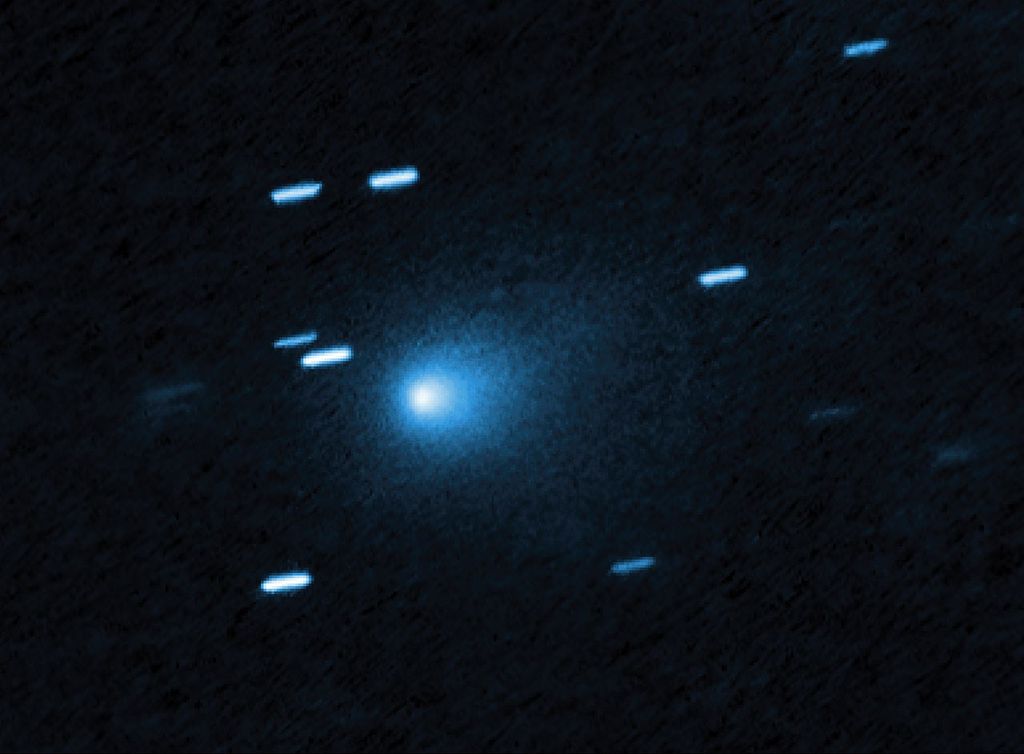
Interstellar Comet 3I/ATLAS Is Spewing Water—And Scientists Are Stunned
Discover more from
Subscribe to get the latest posts sent to your email.
Leave a Reply