
Colorado’s grand experiment in rewilding has moved from ballot box theory to messy, real‑world practice. On one front, gray wolves are back on the landscape under a voter mandate that has tested trust between state agencies and rural communities. On another, Colorado is preparing to welcome wolverines to its high country for the first time in roughly a century, with far less controversy and far more consensus. Together, the two efforts are reshaping how the state thinks about wildness, working lands, and who gets a say in both.
The wolf story began in earnest when voters narrowly approved a 2020 ballot measure directing Colorado Parks and Wildlife (CPW) to restore a self‑sustaining wolf population west of the Continental Divide by the end of 2023. CPW met that deadline with the first releases in December 2023, capturing wolves from established packs in the Pacific Northwest and transporting them to Colorado. Those early releases were framed as the start of a long, adaptive process: a small founding group, closely monitored with GPS collars, followed by additional releases and natural reproduction over time.
On the ground, the rollout has been anything but abstract. Since the first wolves were turned loose, ranchers in several Western Slope counties have reported confirmed wolf depredations on cattle and other livestock. State investigators have tied dozens of incidents to the reintroduced wolves, triggering compensation payments and fueling calls from agricultural groups for clearer, faster investigations and more transparent reporting. For many ranch families, the issue is not just the loss of individual animals, but the stress of calving seasons under the constant possibility of predation and the feeling that a decision made at the ballot box in Denver is being lived out in their pastures.
Mortality has also been a defining feature of the early wolf program. Of the roughly two dozen wolves brought into the state in the first waves of reintroduction, nearly half have died from a mix of causes: legal hunting just over the border in Wyoming, lethal control after repeated livestock attacks, suspected poaching, vehicle collisions, and complications tied to capture or collaring. Biologists note that wolf populations can withstand relatively high annual mortality and still grow, especially when reproduction is strong. But each death carries political weight, especially when it involves a breeding animal or a wolf that has already been the subject of public debate.
Inside CPW, staff have tried to walk a narrow line between the letter of the voter mandate and the realities of managing a large carnivore in a modern, fragmented landscape. The agency has refined its conflict‑response protocols, expanded non‑lethal deterrent programs, and worked with federal partners to maintain the “experimental, nonessential” designation that allows more flexible management than full Endangered Species Act protection would. At the same time, commissioners and staff have faced criticism from both sides: ranchers who feel the state is moving too fast and advocates who worry that lethal control and border‑state hunting are undermining the restoration before it has a chance to succeed.
If wolves have become a lightning rod, wolverines are almost the opposite: a rare case where conservationists, ranchers, and even ski‑area operators have largely found common ground. Extirpated from Colorado for generations, wolverines are wide‑ranging, snow‑loving scavengers and hunters that favor high‑alpine basins, talus slopes, and remote cirques. Their life history—low reproductive rates, large home ranges, and a strong tie to persistent spring snow—has made them a symbol of both wilderness and climate vulnerability across the West.
In 2024, the Colorado legislature passed a bill authorizing CPW to develop and implement a wolverine reintroduction plan. That law gave the agency clear direction and political cover, but it also required extensive consultation with landowners, recreation interests, and local governments. Over the following year, CPW biologists and planners outlined a phased approach: identify suitable high‑elevation habitat, secure source animals from other states or provinces, and release a small founding population into areas with minimal conflict potential and strong connectivity to neighboring mountain ranges.
The relative lack of controversy around wolverines is not accidental. Unlike wolves, wolverines are not expected to pose a significant threat to livestock, and their preferred terrain keeps them mostly above the working landscapes where cattle and sheep graze. Ski areas and backcountry recreation groups have engaged early, focusing on how to monitor denning sites, adjust operations if needed, and use citizen science to track the animals’ movements. For many stakeholders, wolverines represent a chance to “get it right” from the start: clear expectations, robust monitoring, and a shared understanding that the species’ future will be shaped as much by climate change as by local management decisions.
Taken together, the wolf and wolverine efforts reveal a state wrestling with what it means to restore species in a crowded, rapidly changing West. Wolves have forced hard conversations about who bears the costs of statewide decisions and how to balance ecological goals with the day‑to‑day realities of ranching and rural life. Wolverines, by contrast, have opened space for collaboration and long‑term thinking about alpine ecosystems, snowpack, and connectivity across the Rockies.
The next few years will be decisive. For wolves, CPW will need to show that it can reduce conflicts, maintain public trust, and guide the population toward the “self‑sustaining” benchmark envisioned in the original ballot measure. For wolverines, the challenge will be to move from planning to action while climate models continue to shrink the map of reliable snowpack. In both cases, Colorado is not just managing animals—it is testing a model of rewilding that other states are watching closely.
Whether these efforts are ultimately judged as success stories or cautionary tales will depend on more than population counts. They will hinge on whether rural communities feel heard, whether urban voters stay engaged beyond the ballot, and whether the state can hold together a conversation that includes ranchers, hunters, skiers, scientists, and people who simply like knowing that something wild is out there on the ridgelines. For now, Colorado’s reintroduction story is still being written, one collar ping, one livestock claim, and one high‑country survey at a time.
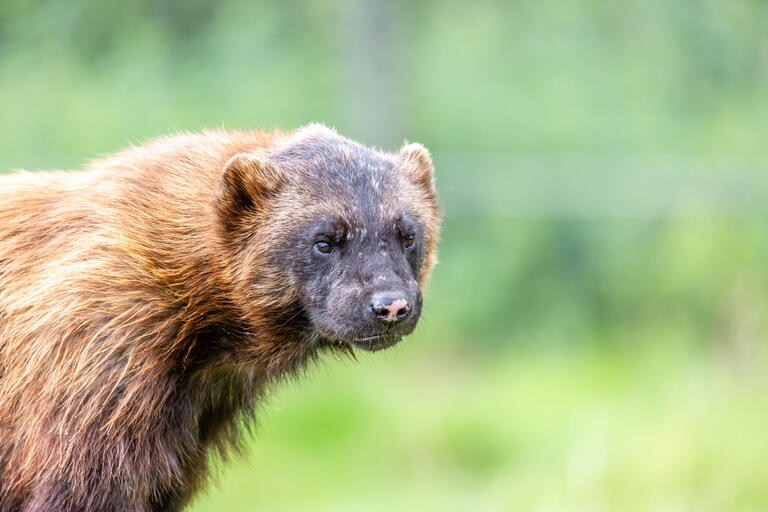
Colorado’s rewilding crossroads: Wolves, wolverines, and a state learning in public
Discover more from
Subscribe to get the latest posts sent to your email.
Leave a Reply