
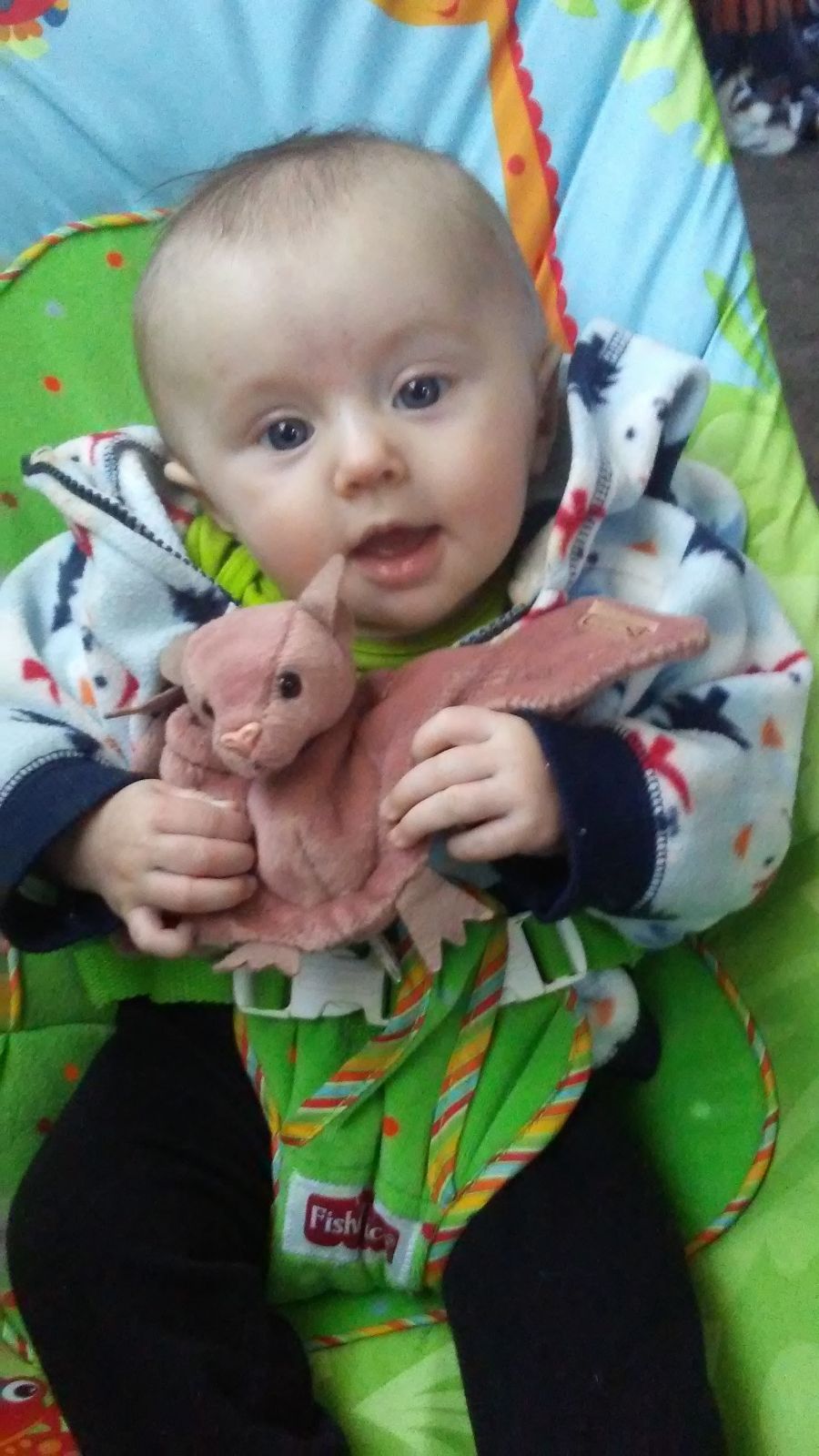

When my daughter was just under a year old, she fell in love with bats. We were shopping at a children’s clothing store in our hometown, and she saw a little brown stuffed bat at the register for sale. For the first time in her life, she squealed when she saw that little primate. As we left the store, she would not stop crying in a high-pitched screech. I relented, like most dad’s do, and walked back into the store…and bought the replica flying mammal. My daughter is now 6 years old and still carries around that bat.
What is a bat?
Some people mistakenly think that a bat is a flying rodent or a rat. This could not be farthest from the truth. The fact is that a bat is closer to a human on the family tree, but is specifically a primate. U.S. Department of the Interior states that a bat is the only flying mammal. Some bats hibernate in the winter and some bats migrate in the winter. Bats are very important for pollination of many of the plants that produce fruit, a good example of this is a banana. In fact there are some 300 different types of fruit that are pollinated by bats. Other bats eat insects keeping these pests at bay. Bats also have very few predators, this is largely because they are an active carrier of many diseases. It is through this lens of diseases that White-nose syndrome has been found in bats in North America and recently in Colorado.
White-nose syndrome
As discussed in this article, some bats hibernate. It is these hibernating bats that are infected by the White-nose syndrome (WNS). WNS is a fungal disease, specifically Pseudogymnoascus destructans (Pd). Pd actually grows on the surface of the skin of the hibernating bat. It is the Pd that produces a type of toxin that will affect the skin and the wings of the bat. When the White-nose syndrome infects a bat, it can cause severe dehydration and starvation, and death is inevitable many times. The fact is that this disease has killed millions of bats throughout North America, making it the predator that is a catastrophic threat to hibernating bats.
How is White-Nose Syndrome Spread?
WNS is spread by contact with the fungus Pd. It is not a fungus that would be found in the open forest or on the ground. This type of fungus is in caves, mines and wherever bats may be hibernating. With that in mind, it is always important to make sure bats do not hibernate where humans may live. If one does come in contact with Pd it is important to wash all clothing and gear. It is also important to wash all clothing and gear before entering a bat habitat and decontaminating clothing and gear after one leaves. In addition, do not touch a bat, even if it is dead.
Although Pd and WNS is not a human disease, remember bats are a very important part of our ecosystem. It is important to remember all the ways that bats affect our lives. When you peel a banana or plunge your carrot into guacamole dip, without bats our lives would change drastically. And yes Quinn, even stuffed toy bats, can be important in our lives.
©️ Rocky Mountain Dispatch 2023
Leave a Reply