
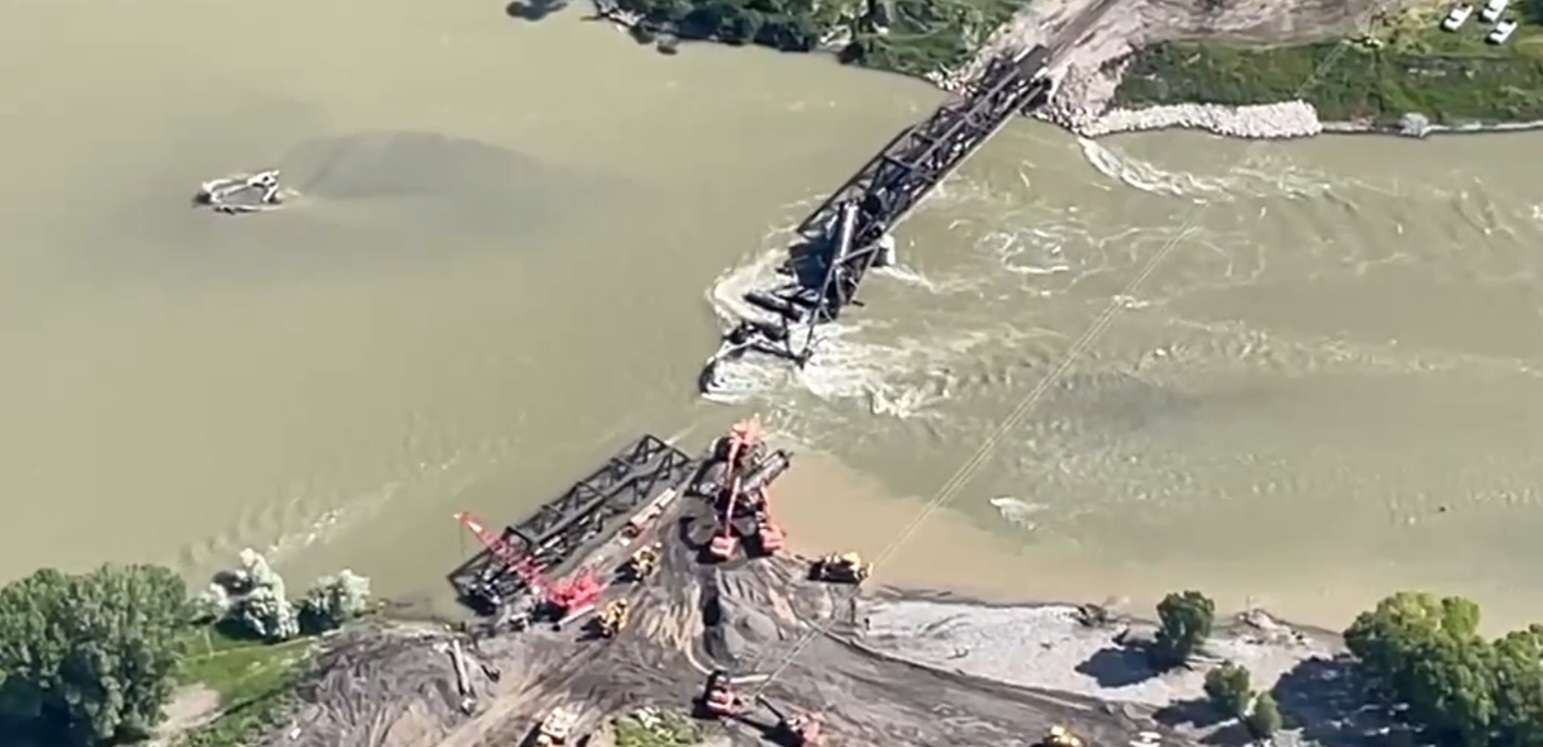
Cleanup crews are continuing to work to remove asphalt from the Yellowstone River after a train derailment last month. The derailment, which occurred on June 1, saw between 300,000 and 500,000 pounds of asphalt spill into the river.
As of July 11, crews have collected approximately 58,000 pounds of asphalt material. However, the full extent of the spill is still unknown, and it is possible that more asphalt could be released into the river.
The cleanup effort is being led by the U.S. Environmental Protection Agency (EPA), with assistance from the Montana Department of Environmental Quality (DEQ) and the U.S. Fish and Wildlife Service. The EPA has said that the cleanup is expected to take several months.
Heat and dehydration are starting to become a safety concern for cleanup crews as material collection can be physically demanding. Whitewater Rescue, a Montana-based company that is assisting with the cleanup, has said that crews are working 12-hour days in temperatures that have reached 100 degrees Fahrenheit.
The derailment has had a significant impact on the Yellowstone River ecosystem. The asphalt has coated rocks and sediment in the river, and it is unclear how long it will take for the river to recover. The EPA has said that the asphalt could have a negative impact on fish and other aquatic life.
The derailment is also a reminder of the risks associated with transporting hazardous materials by rail. In recent years, there have been a number of train derailments involving hazardous materials, including oil and chemicals.
The EPA is urging the public to avoid contact with the asphalt in the Yellowstone River. If you see asphalt in the river, you should report it to the EPA or the DEQ.
What You Can Do to Help
- Avoid contact with the asphalt in the Yellowstone River.
- Report any sightings of asphalt in the river to the EPA or the DEQ.
- Donate to organizations that are working to clean up the spill.
- Contact your elected officials and urge them to support stricter regulations for the transportation of hazardous materials by rail.
The cleanup of the Yellowstone River derailment is a long and difficult process. However, with the help of the public, we can help to ensure that the river is restored to its natural state
©️ Rocky Mountain Dispatch 2023
Leave a Reply