
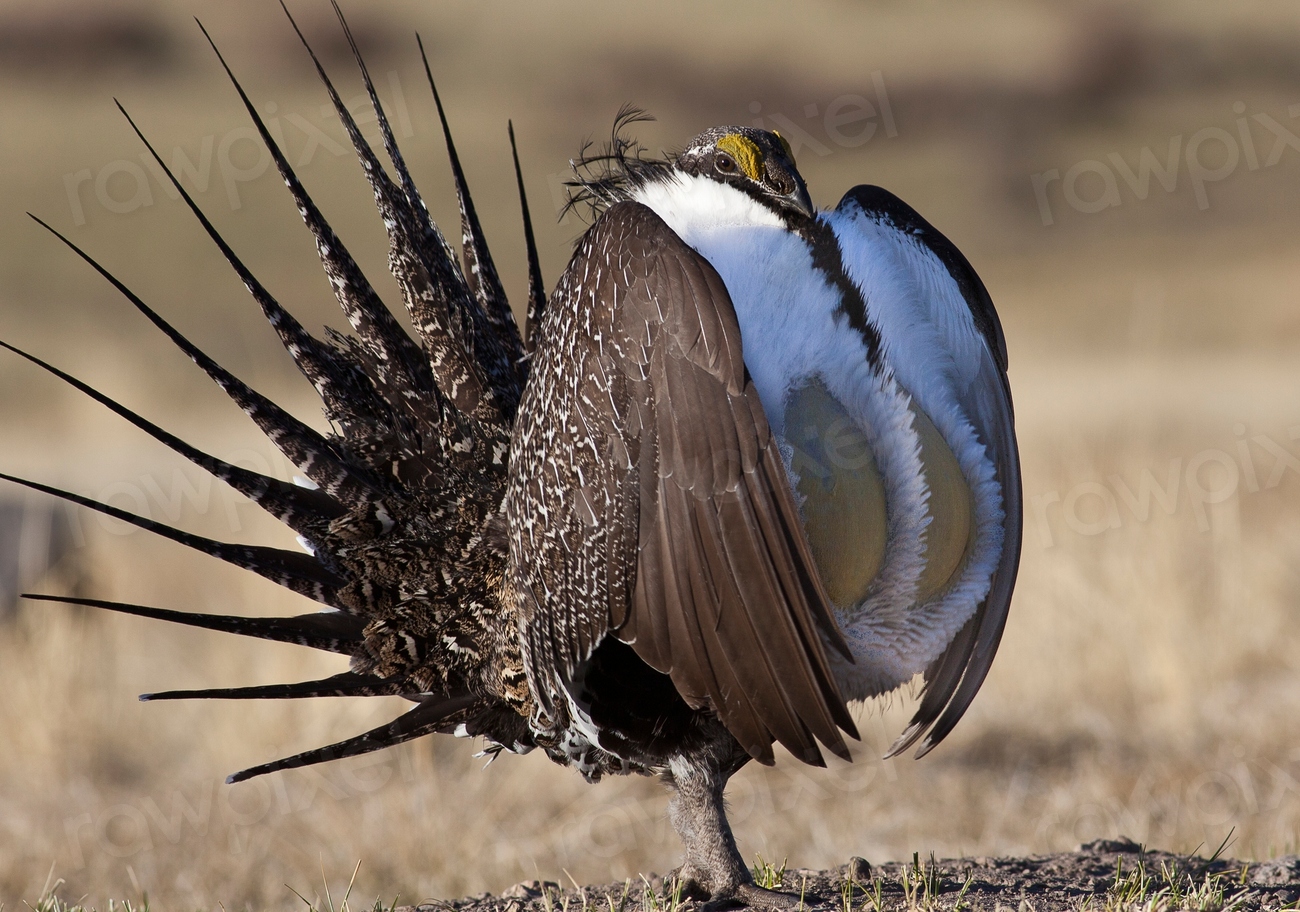

The sagebrush steppe of the American West unfolds like a vast, tawny sea. From this arid expanse emerges the sage grouse, a feathered icon whose flamboyant displays and vital role in the ecosystem paint a vibrant story of struggle and resilience. But beneath the captivating fan of its tailfeathers lies a harsh reality: this sentinel of the sagebrush is facing a silent extinction.
Once numbering in the millions, sage grouse populations have plummeted by a staggering 80% since the 1960s. This stark decline echoes the loss of a vital piece of the West’s ecological tapestry. For Native American tribes, the sage grouse wasn’t just sustenance; its lekking dances inspired ceremonial costumes and rituals, weaving the bird into the very fabric of their cultural identity. Today, biologists view the sage grouse as a “barometer bird,” its fate intimately linked to the health of the sagebrush steppe itself.
Standing tall amidst the sagebrush, the adult male sage grouse, aptly nicknamed “bomber,” commands attention. Its mottled brown plumage blends seamlessly with the landscape, but when spring arrives, the bird transforms into a spectacle of puffed air sacs and strutting feathers. On open leks, bathed in the golden light of dawn, males inflate their chests, fan their tails, and unleash a rhythmic popping sound, a hypnotic serenade intended to woo passing females.
Life for a sage grouse revolves around this vast, intricate habitat. They nestle in the cool shade of sagebrush, raise their young on a diet of tender leaves and insects, and move with nomadic freedom across thousands of acres. But this dance of life requires uninterrupted space. Human encroachment, from energy development to habitat fragmentation, cuts through the sagebrush like a scar, severing essential connections and leaving populations isolated and vulnerable.
The challenges facing the sage grouse are complex and multifaceted. Balancing the needs of a sprawling bird with the demands of a development-hungry society requires a delicate dance of its own. Conservation efforts have emerged, from controlled hunting programs to habitat restoration initiatives, but the fight is far from over. Every lek preserved, every acre of sagebrush restored, brings us closer to ensuring the sage grouse’s future in the tapestry of the West.
For those who cherish the rugged beauty of the sagebrush steppe, the sage grouse represents more than just a feathered creature. It is a symbol of resilience, a testament to the delicate balance of nature, and a reminder of our responsibility to protect the wild places that define our shared heritage. In the silent hum of the sagebrush wind, the sage grouse calls out, not just for its own survival, but for the preservation of a landscape that holds the whispers of a wilder past and the hope for a wilder future.
©️ Rocky Mountain Dispatch 2024
Leave a Reply