
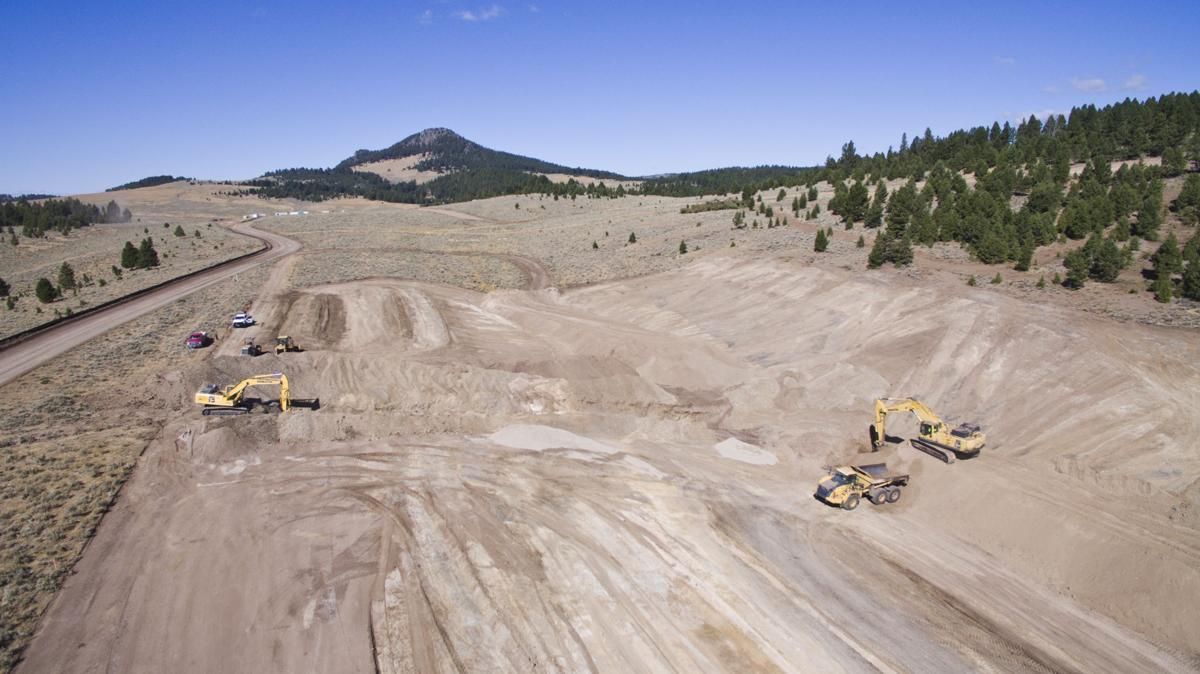

In a controversial decision that has ignited a firestorm of debate, the Montana Supreme Court has ruled in favor of Tintina Montana, the company behind the proposed Black Butte Copper project near White Sulphur Springs. This ruling paves the way for the construction of an underground copper mine, despite vehement opposition from environmental groups who fear the potential consequences for the region’s delicate water resources.
The heart of the dispute lies in the interpretation of Montana’s water laws. Tintina Montana plans to extract groundwater during the mining process, some of which will be used in the milling operation, while the rest will be treated and returned to the groundwater system. The company obtained a permit for the water used in milling but argued that a separate permit was not required for the water removed for mine dewatering purposes, as this did not constitute a “beneficial use” under state law.
Environmental organizations, including Montana Trout Unlimited, Montana Environmental Information Center, Earthworks, and American Rivers, vehemently disagreed with this interpretation. They argued that this exemption creates a dangerous loophole, allowing mining companies to pump vast quantities of groundwater without adequate oversight or consideration of the potential impacts on nearby streams and existing water rights holders.
The court, however, sided with Tintina Montana and the Montana Department of Natural Resources and Conservation (DNRC). In the majority opinion, Justice Jim Rice asserted that the impacts of mine dewatering are addressed through other state regulations and that this interpretation of the law has been consistently applied for decades. He emphasized that it is the prerogative of the legislature, not the court, to modify the existing system if deemed necessary.
This decision has drawn sharp criticism from environmental advocates and dissenting justices. Justice Laurie McKinnon, in her dissenting opinion, argued that the DNRC’s policy, which has not undergone a formal rulemaking process, effectively creates a loophole that could have dire consequences for Montana’s water resources. She expressed concerns about the potential for uncontrolled groundwater extraction, even from closed basins, without proper state oversight.
This ruling marks the second legal victory for the Black Butte Copper project in less than a year. In a previous case, the Montana Supreme Court overturned a district court decision that had invalidated the mine’s operating permit due to concerns about insufficient environmental impact analysis.
While Tintina Montana and its supporters, including Governor Greg Gianforte, have lauded the decision as a victory for the state’s economy and mining industry, environmental groups remain deeply concerned about the potential risks to the Smith River, a renowned trout stream, and the surrounding ecosystem. They have vowed to continue their efforts to protect the Smith River watershed and hold the mining company accountable for any environmental impacts.
The Black Butte Copper project has become a flashpoint in the ongoing debate over balancing economic development with environmental protection in Montana. As construction moves forward, the controversy surrounding the mine is likely to persist, with environmental groups and concerned citizens closely monitoring its operations and advocating for the preservation of the region’s precious water resources.
©️ The Rocky Mountain Dispatch LLC. 2025
Leave a Reply