
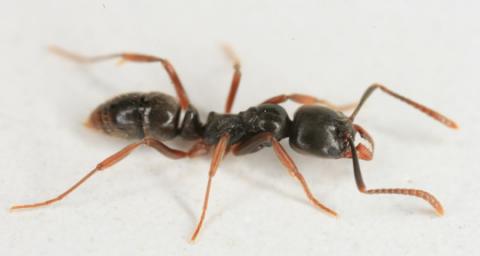

A venomous and invasive ant species, the Asian needle ant ( Pachycondyla chinensis ), is increasingly spreading across the United States, raising concerns among experts due to its painful sting that can trigger severe allergic reactions, including life-threatening anaphylaxis.
Native to East Asia, the Asian needle ant was first detected in the U.S. in the 1930s in Georgia. For decades, its presence remained largely confined to the Southeastern states. However, in recent years, the ant’s population has exploded, and it has been reported in a growing number of states, including Mississippi and Texas, with experts suggesting it is likely only a matter of time before it reaches other regions like Louisiana.
Unlike common household ants that typically bite, the Asian needle ant stings, injecting venom. While not known to be aggressive, they will sting if they feel threatened, such as when trapped against the skin under clothing. For individuals with a history of anaphylactic reactions to other insect stings, such as bees or wasps, the Asian needle ant poses a significant risk. Experts recommend that those who carry an epinephrine auto-injector (EpiPen) should be particularly vigilant and aware of this emerging threat.
Dan Suiter, a professor of urban entomology at the University of Georgia, noted an increase in reports of anaphylaxis cases linked to Asian needle ant stings. “We’ve noticed over the past couple of years an uptick in the number of identifications and reports of an ant called the Asian needle ant,” he stated. “The Asian needle ant stings, and so we consider it both a nuisance and a medical pest.”
These ants are small, typically about three-sixteenths of an inch long, slender, and black. Unlike many other ant species that travel in noticeable trails, Asian needle ants are often solitary foragers, wandering alone. They prefer shaded environments, often found in wooded areas with mature oak trees, under logs, stones, leaf litter, mulch, pavers, and landscape timbers, contrasting with fire ants that typically build visible mounds in sunny locations.
Beyond the medical concerns, the Asian needle ant also presents ecological threats. As an invasive species, it can outcompete and displace native ant populations, which play crucial roles in seed dispersal and maintaining ecosystem balance.
Experts advise the public to exercise caution, especially in wooded areas. Wearing closed-toe shoes and gloves while gardening can help reduce the risk of stings. If you suspect the presence of Asian needle ants on your property, it is recommended to take a photograph and contact your local county extension office for proper identification. Due to the potential for severe reactions, attempting to control these ants without professional help is generally not advised.
©️ The Rocky Mountain Dispatch LLC. 2025
Leave a Reply