
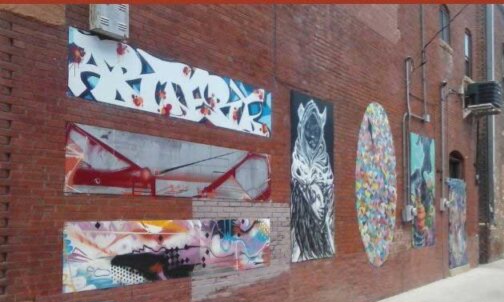

In April 2025, six murals in Pueblo’s Central Plaza—created nearly a decade ago by artists Refic and Mike Strescino as part of the city’s celebrated ARTery project—were abruptly painted over by city crews. The ARTery had transformed downtown alleys into a vibrant walking path of public art, recognized by the American Heart Association for its community health impact.
The city claimed it was responding to a graffiti complaint and acted on a 2013 consent form signed by businessman Louie Carleo. However, Carleo never owned the building at 119 Central Plaza where the murals were located. The rightful owner, Jay Powell of TabCo Limited, was never contacted.
City officials later admitted the error, acknowledging they had relied on outdated and incorrect documentation. Legal experts say the destruction may have violated the federal Visual Artists Rights Act of 1990, which protects works of “recognized stature” and requires 90 days’ notice to artists before removal.
Cultural Erasure: Why It Matters
This incident isn’t just about bureaucratic missteps—it’s part of a troubling pattern across Colorado and the U.S. where public art tied to marginalized communities is erased without consent or accountability.
– The murals were more than decoration—they were expressions of Pueblo’s identity, history, and resilience.
– Their removal sends a message that community voices, especially those rooted in Chicano/a/x heritage, are expendable.
– Pueblo’s murals are part of a statewide network of historic Chicano/a/x artworks, many of which are endangered due to gentrification, neglect, and lack of legal protection.
– As Lucha Martinez de Luna of the Chicano/a/x Murals of Colorado Project (CMCP) puts it: “The murals represent the memory of a people. They say ‘I am here’ and validate voices who are facing ever fewer cultural support systems”.
Governance or Censorship?
The Pueblo Star Journal’s investigative series “Erasing Pueblo” frames the incident as a failure of governance that borders on censorship. The city acted without proper authority, disregarded federal protections, and failed to engage the community in decisions about its own cultural assets.
This isn’t just about art—it’s about who gets to decide what stories are told, preserved, or erased.
©️ The Rocky Mountain Dispatch LLC. 2025
Leave a Reply