
The federal government shutdown entered its 16th day Thursday, with no resolution in sight and mounting consequences for workers, agencies, and the broader economy. The impasse stems from a breakdown in budget negotiations between Congress and the White House, leaving critical services unfunded and hundreds of thousands of employees in limbo.
Legislative Standoff
At the heart of the shutdown is a dispute over health care subsidies, Medicaid funding, and presidential spending authority. The Senate has rejected nine versions of a Republican-backed funding bill, most recently on Wednesday, October 15. Democratic senators have held firm on demands to extend Affordable Care Act subsidies and limit executive discretion over budget allocations.
The next Senate vote is scheduled for Thursday morning at 11 a.m. ET, though expectations for a breakthrough remain low.
Workers and Agencies in Limbo
Approximately 900,000 federal employees have been furloughed, while another 700,000 continue working without pay. The shutdown has disrupted operations across more than 30 federal agencies, including the Department of the Interior, the Environmental Protection Agency, and the National Park Service.
In a notable legal development, a federal judge issued a temporary injunction blocking mass layoffs at several agencies. The ruling cited concerns that the cuts were politically motivated and lacked sufficient justification under federal employment law.
Economic Toll
Treasury Secretary Scott Bessent warned that the shutdown could cost the U.S. economy up to $15 billion per day in lost output. Local governments and contractors have begun reporting delays in federal reimbursements, and economists caution that prolonged disruption could ripple through housing markets, transportation systems, and public health programs.
Despite the shutdown, active-duty military personnel received their scheduled October 15 paychecks. The administration authorized the use of redirected research and development funds to cover payroll, citing national security priorities.
Public Sentiment and Blame
Public opinion remains divided. A recent Washington Post poll found that 47% of Americans blame President Trump and congressional Republicans for the shutdown, while 30% fault Democrats. Nearly 10% of Republican voters expressed dissatisfaction with their party’s handling of the crisis.
Independent voters leaned toward blaming the GOP, citing concerns over health care access and budget rigidity. Meanwhile, internal agency memos have circulated attributing the stalemate to Senate Democrats’ refusal to pass stopgap funding bills without policy concessions.
A USA Today review of national polling suggests widespread frustration with both parties, with many Americans expressing distrust in Congress and the executive branch alike.
The Rocky Mountain Dispatch will continue monitoring developments, including Thursday’s Senate vote and any new court rulings. For Colorado residents affected by furloughs or service disruptions, we encourage community members to share their stories and resources as we navigate this uncertain moment together.
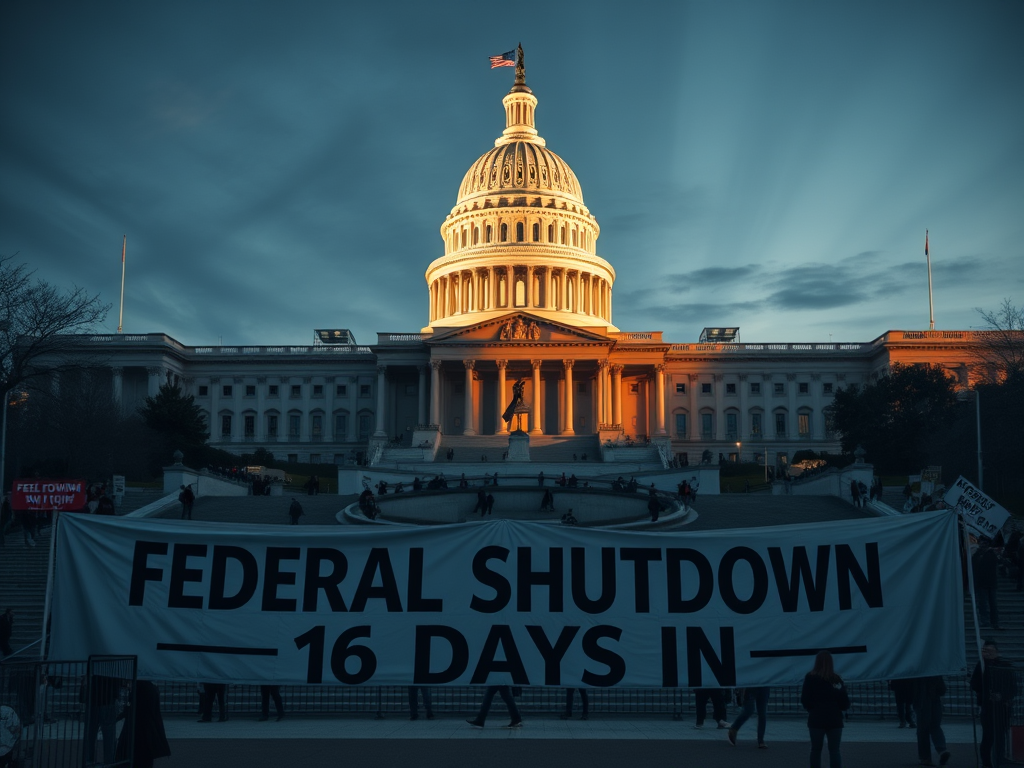
Sixteen Days In: Federal Shutdown Deepens as Senate Gridlock Continues
Discover more from
Subscribe to get the latest posts sent to your email.
Leave a Reply