
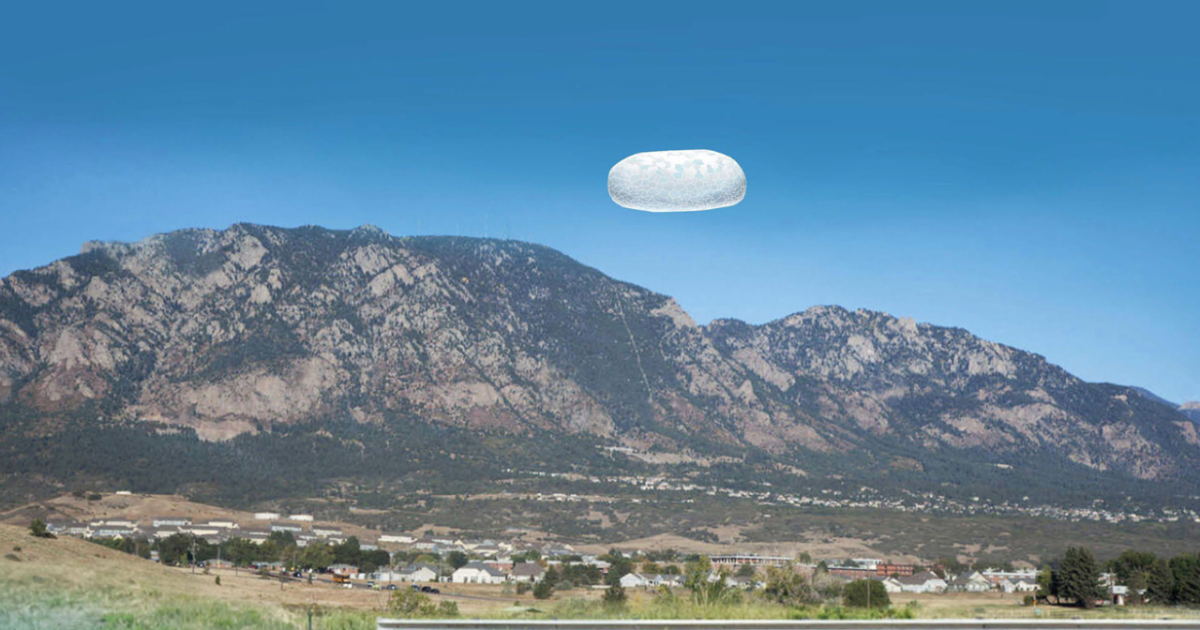
A lingering question hangs over the skies of El Paso County following last week’s declassification of UAP case file MIL-2022-104: If the object hovering over Cheyenne Mountain was not an atmospheric trick of light, what was it?
The February 2022 encounter, involving five U.S. Army intelligence officers at Fort Carson, has sparked intense debate among local observers and aerospace experts. While the Department of War remains noncommittal, the incident is far from an isolated event in our region. According to data from the National UFO Reporting Center, the Colorado Springs area has logged nearly 300 alleged sightings since 1995, ranking it among the highest for urban sighting density in Colorado. The “Cheyenne Potato” case stands out from the thousands of reports nationwide for its high-caliber witness accounts and its direct association with a critical national security site.
During a clear February morning, five service members observed a 300-to-500-foot object hovering motionless near the Cheyenne Mountain silhouette for nearly two minutes. Witnesses described a potato-shaped craft with a creamy, opalescent, and slightly translucent surface. Most uniquely, the object appeared to be covered in articulating fish scales, consisting of non-symmetrical panels that shifted in slow, rhythmic waves. Perhaps most strikingly, the object vanished instantly, cloaking in the time it took for a witness to turn their head, leaving no shadow or wake behind.
The Pentagon’s All-Domain Anomaly Resolution Office concluded its investigation with low confidence, citing atmospheric backscattering, a phenomenon where low-angle sunlight reflects off snow-covered mountain slopes to illuminate particulates in the air. However, the witnesses, all trained intelligence personnel, disputed this, noting that the sky was perfectly clear and that the object possessed a distinct, rigid structure rather than a diffuse, misty quality. Despite the high-tech sensors and daily monitoring of the region, the total lack of radar or photographic data from this incident has become a point of frustration for researchers, fueling questions about whether such phenomena are evading detection or if the government holds data not yet released to the public.
While the “Cheyenne Potato” has captured national headlines, it exists within a larger, well-documented UAP landscape. Colorado is a top-tier state for UAP reports, with over 2,100 sightings recorded since the 1970s. While rural hotspots like the San Luis Valley are famous for high-strangeness and nocturnal lights, Colorado Springs sightings are typically observed in an urban setting, often near high-security installations. The United States features several established hotspots, including Nevada’s Extraterrestrial Highway and Utah’s Skinwalker Ranch, which are often characterized by remote terrain and proximity to military testing grounds. Colorado Springs mimics these hotspots in its proximity to sensitive infrastructure, such as the Cheyenne Mountain Complex, and its clear, high-altitude skies, but it is unique in that reports frequently involve trained military observers rather than casual civilian onlookers.
The fundamental obstacle to identifying the “Cheyenne Potato” remains the lack of hard evidence. Despite the military involvement and the proximity to one of the most monitored sites in the world, the case remains an unresolved riddle. Until the military or independent researchers can capture a high-resolution, multi-sensor data set of a similar event, the “Cheyenne Potato” will remain a symbol of the ongoing friction between human observation, advanced aerospace technology, and the mysteries of our atmosphere.
Leave a Reply