
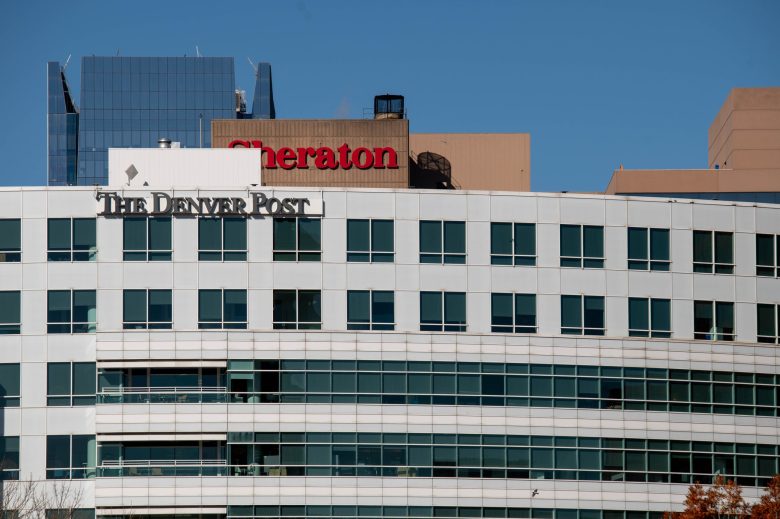
The iconic, block-lettered signage spelling out “The Denver Post” will soon vanish from the top of 101 West Colfax Avenue, marking the quiet end to a bitter real estate battle between Colorado’s largest newspaper and the city it covers. In mid-June 2026, the city of Denver finalized a $13.5 million settlement with DP Media Network LLC, the operating entity for The Denver Post. The agreement abruptly terminates the paper’s master lease three years ahead of schedule, resolving a multi-million-dollar standoff over unpaid rent.
The Strategic Exit
To the casual observer, a massive financial penalty might sound like a devastating blow to a newsroom that has endured a decade of shrinking staff and aggressive budget cuts. A closer look at the deal, however, reveals a calculated corporate exit strategy orchestrated by one of the wealthiest and most controversial forces in American media. The eleven-story glass office tower across from Denver’s Civic Center Park was originally built in 2005 to house both The Denver Post and its fierce, century-long rival, the Rocky Mountain News. Following the closure of the Rocky in 2009, the Post inherited the massive footprint.
By 2018, management had abandoned the downtown headquarters entirely, relocating journalists to a printing facility in industrial Adams County, yet DP Media Network remained legally tied to the building’s master lease. The dynamic shifted drastically in 2024 when Denver purchased the building for $88.5 million to convert it into city offices and courts, essentially becoming the newspaper’s landlord. In August 2025, DP Media Network stopped paying its $650,000 monthly rent check, prompting Denver officials to launch a legal campaign to claw back the funds.
Under the terms of the newly minted June 2026 agreement, DP Media Network will hand over a lump sum of $13.5 million, covering roughly twenty-one months of back-rent and late fees. Had the company been forced to honor the lease through its original 2029 expiration date, it would have owed Denver approximately $34.5 million. By settling today, the hedge fund legally walks away from the contract while saving roughly sixty percent of its remaining obligation. Denver, in turn, takes full control of the building on June 30, 2026, allowing the city to directly collect revenues from the tower’s lucrative parking structure and its other corporate tenants.
Hedge Funds and Regional Monopolies
The ability to easily absorb a $13.5 million payout lies directly in the ownership of the newspaper. The Denver Post’s parent company, MediaNews Group, is entirely owned by Alden Global Capital, a New York-based hedge fund managing billions of dollars in assets. Alden has gained notoriety across the journalism industry for an aggressive business model focused on purchasing historic metropolitan newspapers, heavily consolidating operations, and selling off premium real estate to maximize short-term profits. Through its subsidiaries, Alden is now the second-largest newspaper publisher in the United States, controlling major national titles including the Chicago Tribune, the New York Daily News, the Boston Herald, and the San Jose Mercury News, alongside a near-monopoly of Colorado papers ranging from the Boulder Daily Camera to the Fort Morgan Times.
The Ultimate Media Irony
While The Denver Post’s journalists no longer operate out of downtown, the company’s physical infrastructure remains incredibly lucrative. To stay profitable, MediaNews Group heavily relies on industrial contract printing at its massive facility in Adams County. Because high-speed newspaper presses are immensely expensive to operate, the facility functions as a regional printing hub, churning out copies of national giants like The Wall Street Journal and USA Today.
The ultimate irony of Colorado’s media landscape occurs nightly on those very same presses. Every evening, the Adams County facility prints the Colorado Springs Gazette, which is owned by Clarity Media Group and backed by Denver billionaire Philip Anschutz. Clarity Media Group is Alden’s fiercest direct competitor in the Rocky Mountain region, having recently launched the Denver Gazette as a digital-first daily explicitly designed to compete with the Post. Despite the intense editorial warfare between the two news organizations, economic necessity forced a marriage of convenience. When Clarity Media closed its aging Colorado Springs printing plant in 2013 to slash overhead costs, they chose to outsource production to their biggest rival’s highly efficient Denver facility. As the Denver Post sign comes down from the Colfax Avenue skyline this month, the settlement ultimately underscores the reality of twenty-first-century print journalism: a world governed less by romantic notions of newsroom rivalries, and more by the cold logistics of hedge-fund real estate and shared printing presses.
Leave a Reply