
Here in the Colorado Springs region, sharing our neighborhoods with local wildlife is simply a part of daily life. Sometimes, the best encounters happen when we least expect them. During a recent drive up near Cheyenne Mountain, I found myself hitting the brakes not for traffic, but for a family of familiar, feathered neighbors making their way across the pavement: wild turkeys.
With the kids—Raelene, Leonard, Jazmine, Quinn, and Willow—watching from the windows, we paused our trip to give a couple of adult females, called hens, and their newly hatched young, known as poults, the right of way.
While spring is known for the dramatic strutting and echoing gobbles of the males (toms), mid-summer brings this entirely different spectacle to our residential spaces and mountain roads.
Precocial Poults: Ready for the World
Unlike many backyard songbirds that hatch helpless and featherless, wild turkey poults are “precocial.” This means they hit the ground running. Within just 24 hours of hatching, these little ones are dry, covered in camouflaging down, and ready to leave the nest to follow their mother.
As we saw firsthand on our drive, hens will lead their broods out of the brush and across paved areas in search of food. The hens are highly protective, keeping a watchful eye on the surroundings and using soft clucks to keep the flock together, but they do not feed their young beak-to-beak. The poults are entirely responsible for catching their own meals from day one.
A Summer Diet: From Bugs to Botanicals
Right now, those tiny poults we watched crossing the road are in a crucial growth phase. For their first four weeks, they require a massive amount of protein to fuel their rapid feather development. If you see them pecking eagerly at the dry grass near the street, they are likely hunting down a carnivorous feast of grasshoppers, beetles, spiders, ticks, ants, and caterpillars.
As the summer progresses, their diet will transition. By the time they look like miniature adults later this fall, they will become true omnivores, foraging alongside the hens for seeds, acorns, tender grasses, and berries.
Coexisting on the Front Range
It is not uncommon to see multiple hens merge their broods into larger groups called “creches” during the summer months to provide extra sets of eyes against predators. As these flocks navigate our neighborhood streets, yards, and mountain backroads, the best thing we can do is exactly what our family did near Cheyenne Mountain: stop, give them plenty of room, and enjoy the show.
Enjoy the view of these fascinating birds as they take their summer strolls, and remember to always brake for our local wildlife.
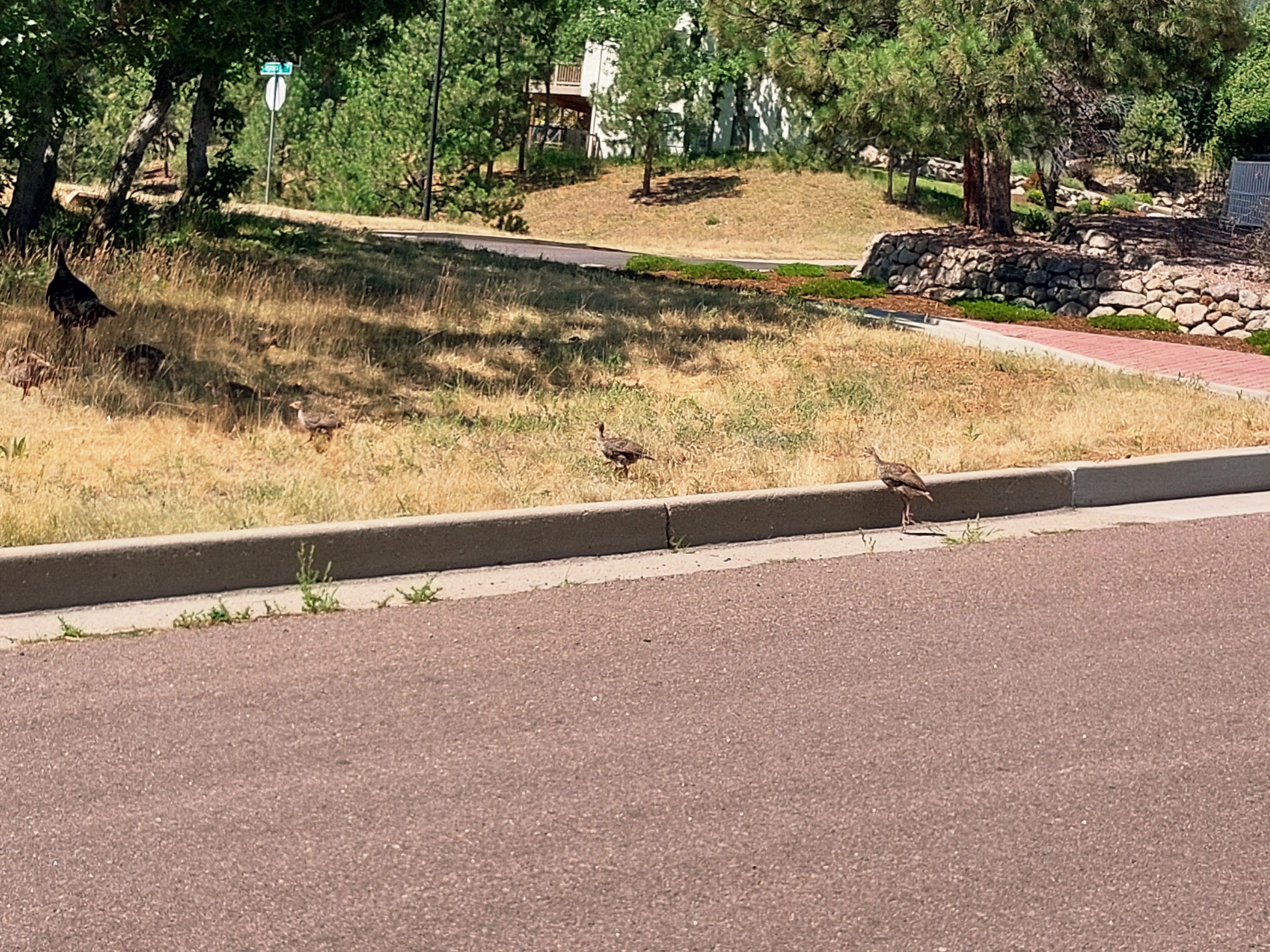
Wildlife Sunday: A Feathered Family Roadblock on Cheyenne Mountain
Discover more from NEWS THAT MOVES YOU
Subscribe to get the latest posts sent to your email.
Leave a Reply