
COLORADO SPRINGS, Colo. — NASA’s Neil Gehrels Swift Observatory has officially concluded its historic mission, plunging back into Earth’s atmosphere after nearly 22 years of studying the most violent explosions in the cosmos, according to a NASA release on ScienceDaily. The U.S. Space Force confirmed that the pioneering spacecraft re-entered the atmosphere at 7:39 a.m. EST on November 4 above North Sumatra, Indonesia, at approximately 3.4 degrees north latitude and 98.6 degrees east longitude.
Launched in 2004 with a planned operational lifespan of just two years, the observatory remained a cornerstone of high-energy astrophysics for more than two decades, operating over ten times longer than engineers originally envisioned. As highlighted by NASA Science’s Astronomy Picture of the Day, heightened atmospheric drag triggered by the most recent solar maximum accelerated the decay of the satellite’s low-Earth orbit, and an innovative attempt to rescue the spacecraft by boosting its altitude was unsuccessful.
Swift carried a specialized suite of three instruments—including an Ultraviolet/Optical Telescope, an X-ray telescope, and a gamma-ray telescope—engineered to detect and rapidly pivot toward fleeting gamma-ray bursts generated by collapsing massive stars and colliding neutron stars, according to ScienceDaily. Whenever the satellite detected a high-energy flash, it automatically redirected its instruments toward the source and transmitted coordinates to ground-based and space-based observatories worldwide within seconds.
Beyond its primary mission of decoding gamma-ray bursts, the observatory reshaped astronomers’ understanding of supermassive black holes powering active galactic nuclei, stellar X-ray flares, supernovae, and even solar system comets and asteroids. While most of the spacecraft burned up like a shooting star during atmospheric re-entry, astronomers noted in NASA Science’s Astronomy Picture of the Day that the millions of multi-wavelength exposures archived by Swift will fuel astrophysical research for years to come.
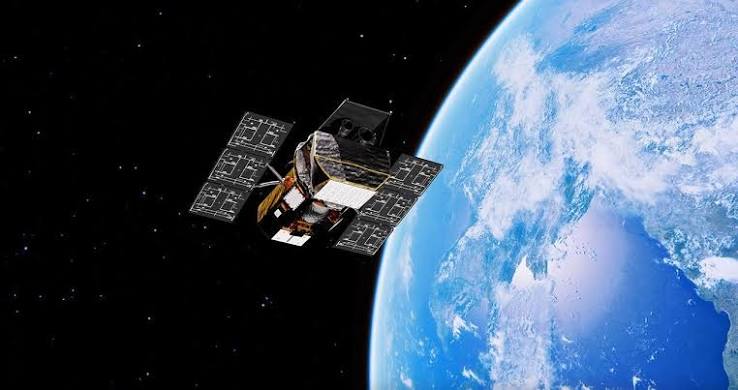
NASA’s Swift Observatory Re-Enters Earth’s Atmosphere After Nearly 22 Years of Cosmic Discovery
Discover more from NEWS THAT MOVES YOU
Subscribe to get the latest posts sent to your email.
Leave a Reply