
COLORADO SPRINGS, Colo. — OpenAI and enzyme-design biotechnology firm Ligo have unveiled BioBasicsBench, a 100-task scientific evaluation designed to measure whether artificial intelligence agents can accurately interpret messy, real-world experimental data from biological wet laboratories, according to an OpenAI research publication. Unlike traditional scientific benchmarks built around polished charts from published journal articles, BioBasicsBench tests whether AI models can troubleshoot failed experiments, spot mislabeled control plates, and recognize when ambiguous laboratory evidence does not support a conclusion.
Developed by wet-lab researchers using raw outputs from their own bench work and vetted through three rounds of internal and PhD-level external review, the benchmark spans five core areas of molecular biology: protein methods, imaging and cytometry, quantification and assays, nucleic acid methods, and molecular cloning. Across the 100 tasks, agents must evaluate 31 DNA agarose gels and Western blots, 27 lab notebook protocols and run records, 20 raw instrument CSV and flow cytometry exports, 18 benchtop apparatus photographs, 14 fluorescence microscopy sets and z-stacks, 12 raw sequencing files, and 7 transformation agar plates, as detailed by OpenAI.
Across 18,500 scored attempts covering seven frontier models at high reasoning effort, GPT-6 Astra achieved an average score of 66.7 percent of available rubric credit, followed by GPT-6.1 Sol at 62.0 percent and GPT-5.6 Sol at 43.8 percent, according to OpenAI. Researchers attributed the jump in performance to stronger multimodal visual inspection: in one molecular cloning task, GPT-6 Astra zoomed in on a handwritten rim label reading “LB Kan50” to catch that a negative control plate had been prepared with kanamycin rather than ampicillin, whereas earlier models blindly trusted the blank control plate.
Despite those gains, the evaluation revealed persistent failure modes that prevent current AI models from operating autonomously at the laboratory bench. In several tasks, GPT-6 Astra allowed pre-existing textbook assumptions about PCR band sizes to override actual control lane references, discounted lighter microscope regions that contradicted its preferred contrast rule, and overcounted bacterial colonies on an agar plate by roughly 12 percent by marking empty agar and merging neighboring colonies, underscoring the need for strict human verification in experimental biology.
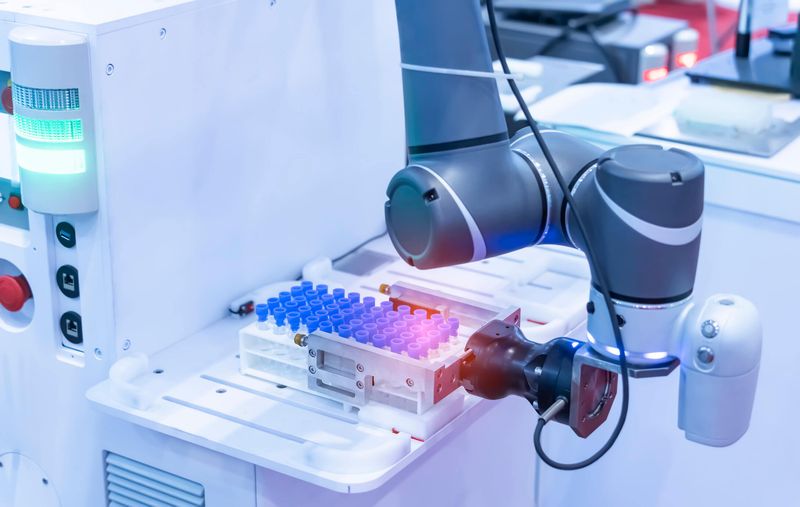
New BioBasicsBench Evaluation Tests How AI Agents Handle Raw Wet-Lab Biology Data
Discover more from NEWS THAT MOVES YOU
Subscribe to get the latest posts sent to your email.
Leave a Reply