
It takes a lot to wake up from a 321-day nap, especially when you are drifting through the frozen, pitch-black edge of the solar system. But on June 23, NASA’s New Horizons spacecraft did exactly that.
Mission controllers confirmed last month that the legendary robotic explorer successfully woke from its longest-ever period of hibernation. The spacecraft is currently healthy, fully functional, and preparing for its next chapter of deep-space discovery. It is a quiet but monumental milestone for a probe that has already secured its place in history as the first human-made object to show us the face of Pluto.
A Historic Encounter
More than a decade ago, New Horizons completely captured the world’s imagination. On July 14, 2015, after a nine-year journey across the solar system, the spacecraft made its historic closest approach to Pluto, skimming just 7,800 miles above its surface.
Before that summer day, Pluto was little more than a blurry, pixelated smudge in our most powerful telescopes. In a matter of hours, New Horizons transformed our understanding of the outer solar system. It beamed back breathtaking, high-resolution images of a complex world, revealing towering water-ice mountains, surprisingly active geology, and a vast, heart-shaped glacier made of nitrogen ice. It also provided our first detailed look at Charon, Pluto’s largest moon. Now, eleven years after that groundbreaking flyby, the little probe is still hard at work.
A Message Nine Hours in the Making
Today, New Horizons is cruising through the Kuiper Belt, a vast ring of icy debris beyond Neptune roughly 5.9 billion miles from Earth.
The wake-up call that roused the probe was actually programmed into its onboard computers nearly a year ago. At its current staggering distance, radio signals traveling at the speed of light take approximately nine hours to cross the void. When the spacecraft finally beamed back its “green” status beacon to confirm it was wide awake, engineers cheered a victory decades in the making.
Even while the spacecraft slept to conserve its dwindling power, its automated instruments were not entirely idle. New Horizons spent the last ten months quietly logging impacts from cosmic dust particles and measuring the stream of charged solar particles rushing past it. The mission team is now beginning the slow, meticulous process of downlinking that massive backlog of data.
Piercing the Solar Bubble
With no immediate dwarf planets along its current trajectory, what exactly is the probe looking for now?
The answer lies at the very edge of our solar system’s protective bubble. Scientists are pivoting the mission to study the outer heliosphere, which is the massive region where the Sun’s solar wind collides with raw interstellar space. New Horizons will measure ambient hydrogen atoms to help researchers map the “termination shock,” the turbulent boundary zone where the solar wind abruptly slows down as it hits the interstellar medium.
Because the spacecraft is speeding away from the Sun at roughly 300 million miles per year, its environment will only get darker and colder. To keep the mission alive, engineers on Earth are currently rolling out comprehensive ground software upgrades. These vital updates will give the spacecraft much greater autonomy, allowing it to manage its own systems as its nuclear battery naturally decays.
If all goes according to plan, the spacecraft that finally introduced us to Pluto will keep sending data back to Earth well into the 2050s, serving as humanity’s silent sentry in the deep dark.
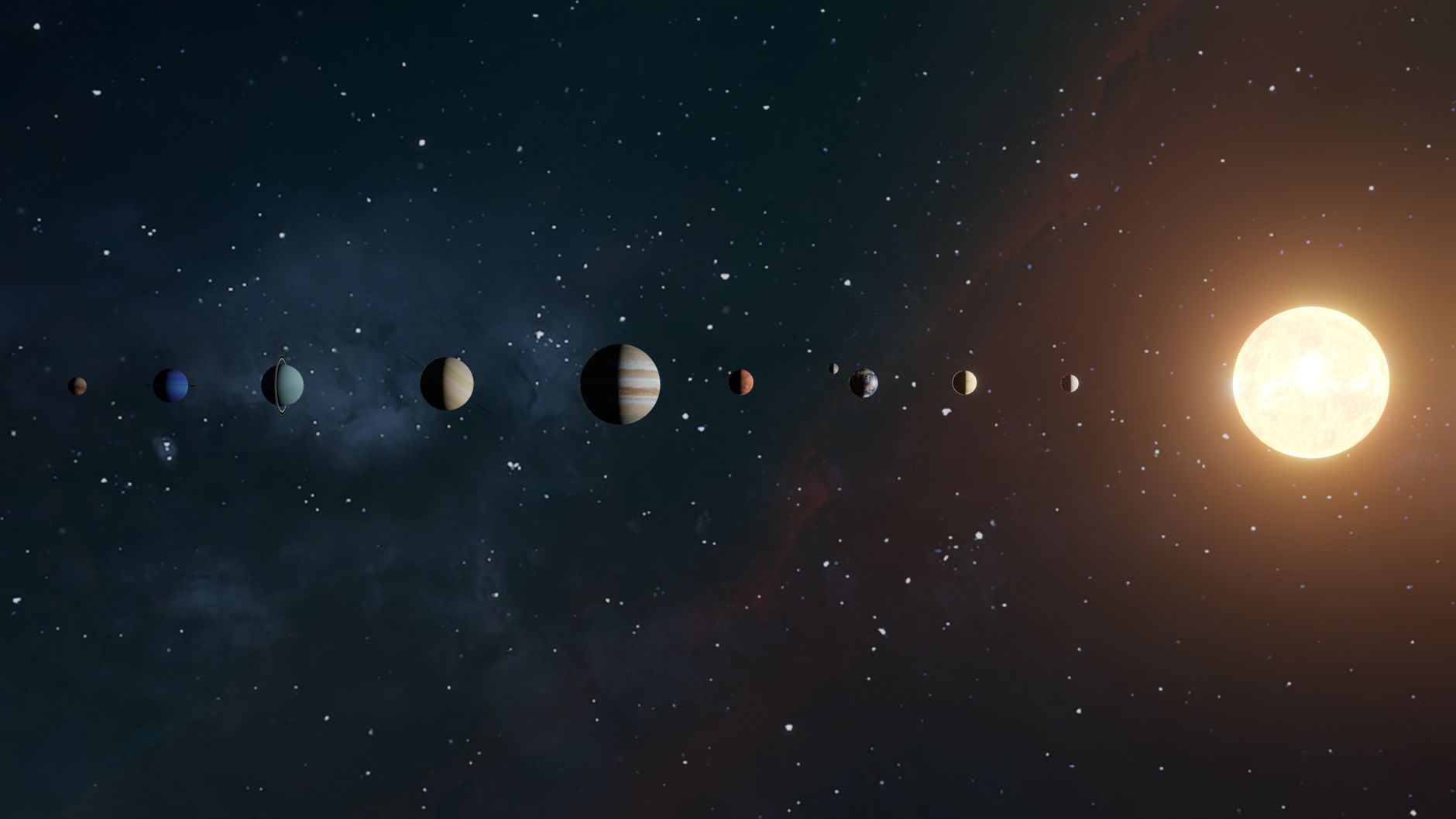
Waking the Explorer: The Probe That Revealed Pluto’s Heart Rouses 6 Billion Miles Away
Discover more from NEWS THAT MOVES YOU
Subscribe to get the latest posts sent to your email.
Leave a Reply